
Last updated November 2, 2026
 Wrought iron
 Wood & steel frame
 Farm & ranch
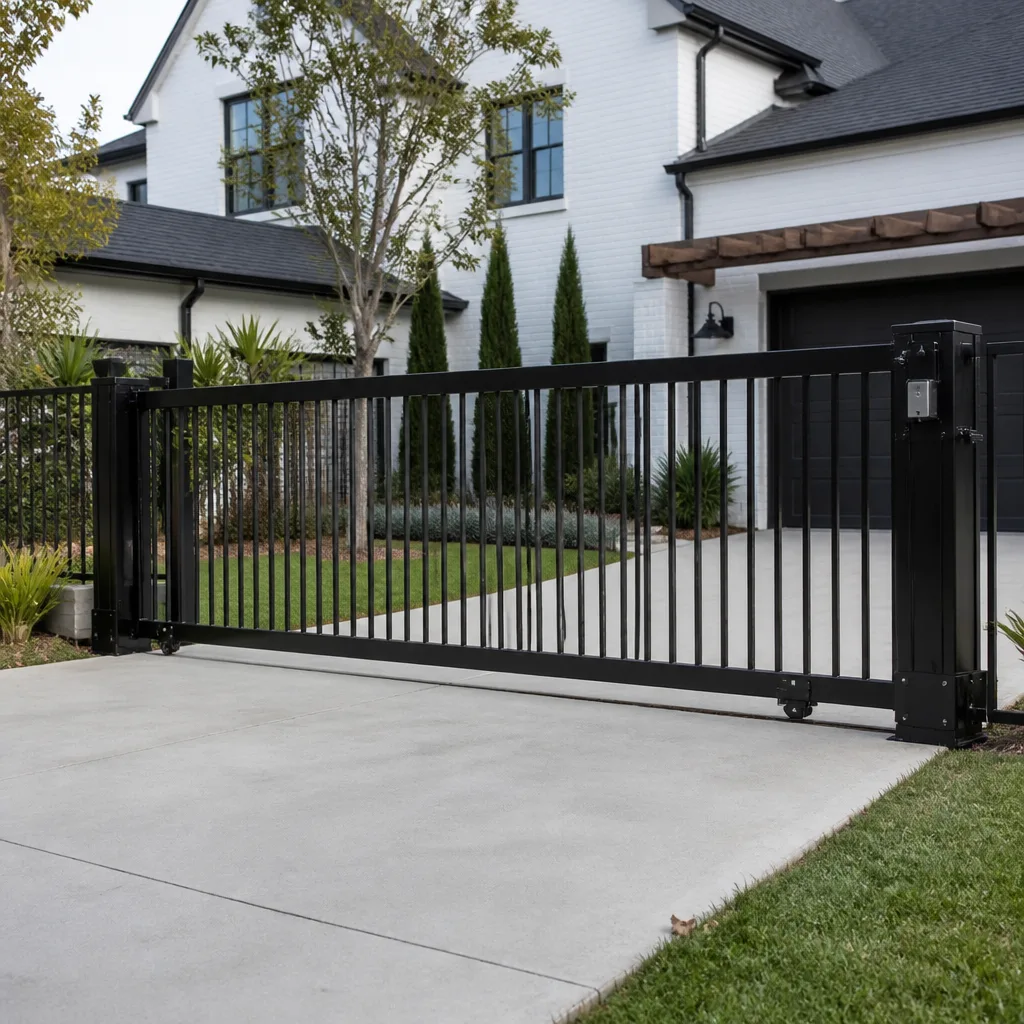 Sliding driveway gates
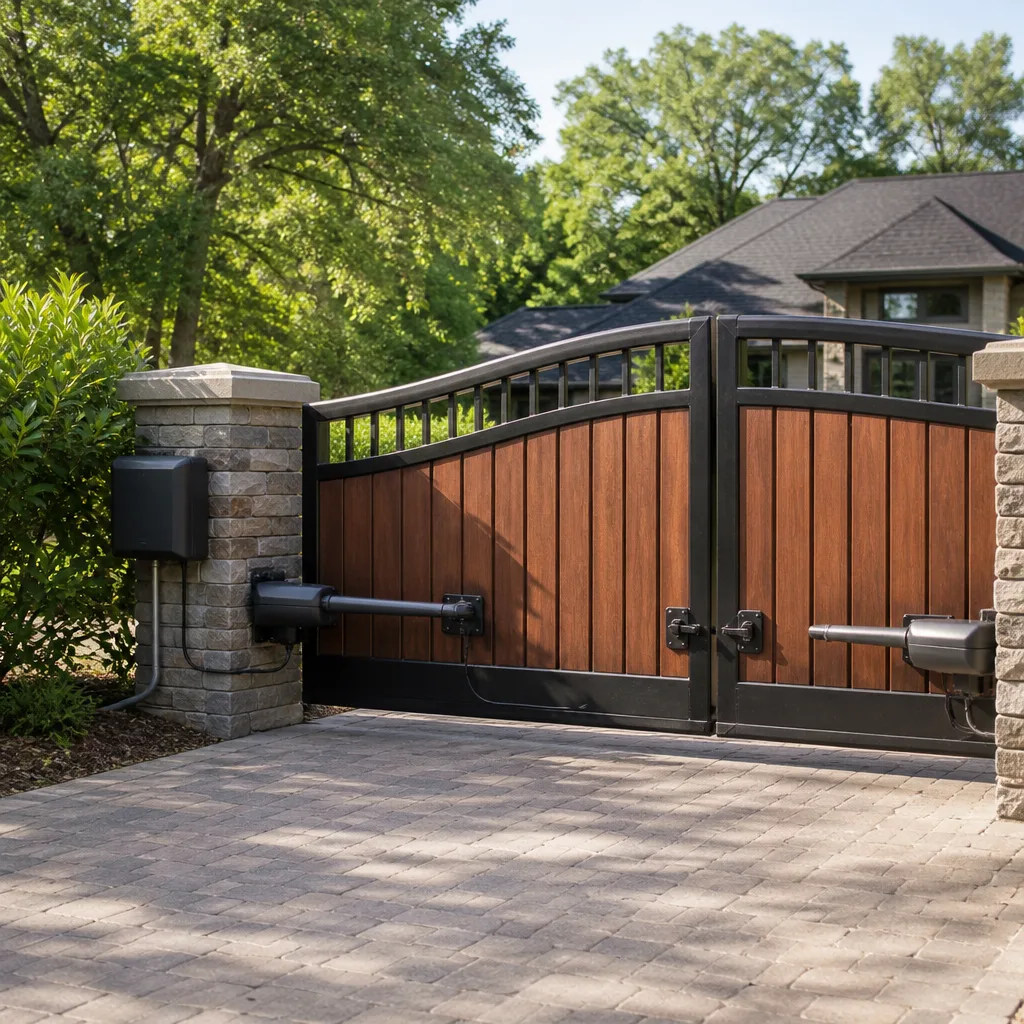 LiftMaster operators
Free on-site gate assessment - hinges, posts, and your LiftMaster or Nice gate operator checked before anything is quoted
The assessment is free and the quote is the invoice.
Get your free estimateGate Repair Permits, Codes & Inspections in CA: What You Need to Know
Most gate repairs in California never cross a permit desk. Swap a failed circuit board, replace a worn gear, or install a new keypad, and the city has no interest in your project. But the moment you cut a weld on a gate post, relocate a hinge, or run new conduit to a gate operator, you have entered regulated territory. Failure to recognize that line is how South Gate property owners end up with stop-work orders stapled to a fence and insurance claims denied after an accident. This guide draws the exact permit line for South Gate and explains the codes, inspections, and consequences that matter when your automated gate needs work.
Styles & brands we work with
- Wrought iron
- Wood & steel frame
- Farm & ranch
- Sliding driveway gates
- LiftMaster operators
Quick Answer
Most gate repairs in South Gate require no permit because they involve replacing existing components without structural or electrical modifications. For Gate Repair Troubleshooting: Common Problems and How to Fix Them, a permit is required when the work changes the gate’s structure (moving posts, resizing the gate), adds new electrical wiring from the panel, or alters the gate’s swing or slide path. Commercial and multi-unit automated gates also carry mandatory UL 325 safety compliance obligations that exist independently of building permits.
Table of Contents
- Where the Permit Line Actually Sits in South Gate
- Work That Triggers a Permit Under California Code
- Repairs That Never Require a Permit
- UL 325 Explained: The Safety Standard Behind Automated Gates
- How the Permit Process Works in the City of South Gate
- The Insurance Consequences of Unpermitted Structural Work
- How to Verify a Contractor’s Permit Claim
- Common Mistakes to Avoid
- When to Call a Professional
- Frequently Asked Questions
- The Bottom Line
Where the Permit Line Actually Sits in South Gate
California Building Code draws a clear distinction between repair work and alteration work. A repair restores a component to its original condition and function. An alteration changes what was there before. South Gate enforces this distinction through its Building and Safety Division, which reviews gate projects exactly as it reviews any other building modification. We have watched property owners spend weeks untangling projects that a thirty-minute permit check would have avoided.
The practical rule is this: if the work involves replacing a part with an equivalent part, you do not need a permit. If the work changes the size, position, weight, or electrical load of the gate, you likely do. That distinction matters because automated gates involve both structural and electrical systems. A gate motor draws power. A gate panel weighs hundreds of pounds. Both factors influence when the city gets involved.
South Gate’s climate also plays a role. Summer heat expands metal. Gate posts shift in expansive soil. When a gate starts binding or the motor strains, Gate Repair Warning Signs: A South Gate Homeowner’s Reference Guide can help identify whether the real problem is structural rather than mechanical. A technician who only swaps parts without addressing the underlying post movement will be back in six months. And if the fix requires resetting a post in new concrete, that is structural work. That requires a permit.
For a broader look at what typical gate service includes, see our Gate Repair in South Gate page.
Work That Triggers a Permit Under California Code
Three work categories consistently require a permit for gate projects in South Gate. None of them are obscure. All of them are work that homeowners and property managers routinely underestimate.
Structural Modifications
Moving a gate post, changing the gate’s height or width, replacing a solid steel gate with a heavier one, or converting a swing gate to a slide gate all change the structural load on the supporting elements. Under California Residential Code Section R105.1, any work that alters the structural members of a building or structure requires a permit. A gate post anchored in concrete is a structural member. Cut it, move it, or replace it with a different size, and the city wants to review the plan before the concrete is poured.
Electrical Panel Connections
Hardwiring a new gate operator to a dedicated circuit requires an electrical permit. Plugging an operator into an existing outdoor GFCI outlet does not. The distinction sounds simple, but many gate installations need dedicated circuits because the operator draws continuous power and shares the circuit with outdoor lighting or pool equipment. Adding a new breaker or running new conduit is regulated electrical work. The National Electrical Code applies, and South Gate’s building inspectors enforce it.
UL 325 Compliance Triggers
UL 325 is a safety standard written by Underwriters Laboratories that governs automated gate operators. Any time a new operator is installed, or an existing operator is modified in a way that changes its safety features, UL 325 compliance comes into play. The standard requires photo eyes or contact edges that reverse the gate when an obstruction is detected, and it mandates specific force limits on the motor. A gate that closes with too much force can injure or kill a child or pet. California enforces UL 325 for all automated gate installations, and South Gate inspectors check for compliant safety devices on any gated project that comes in for review.
Learn more about how we handle Electric Gate Repair in South Gate across all major operator brands.
Repairs That Never Require a Permit
Here is the list of gate work that South Gate property owners can schedule without involving the Building and Safety Division. These are all component-level replacements on existing systems.
- Gate operator swap: Replacing a failed motor or control board with a compatible unit from the same brand. No structural change, no new wiring from the panel. No permit.
- Keypad and receiver replacement: Swapping a keypad, adding a new remote receiver, or replacing an intercom module. Low-voltage accessories are exempt.
- Sensor and photo eye replacement: Replacing a failed safety sensor or photo eye with a UL 325-compliant equivalent. This is a safety improvement, not a modification.
- Hinge and roller replacement: Replacing worn hinges, rollers, or guide wheels on an existing gate. The gate’s weight and size remain unchanged.
- Track repair on slide gates: Repairing or replacing a damaged section of existing track without changing the gate’s path or length.
- Gate opener battery replacement: Replacing backup batteries in an existing operator. No wiring changes involved.
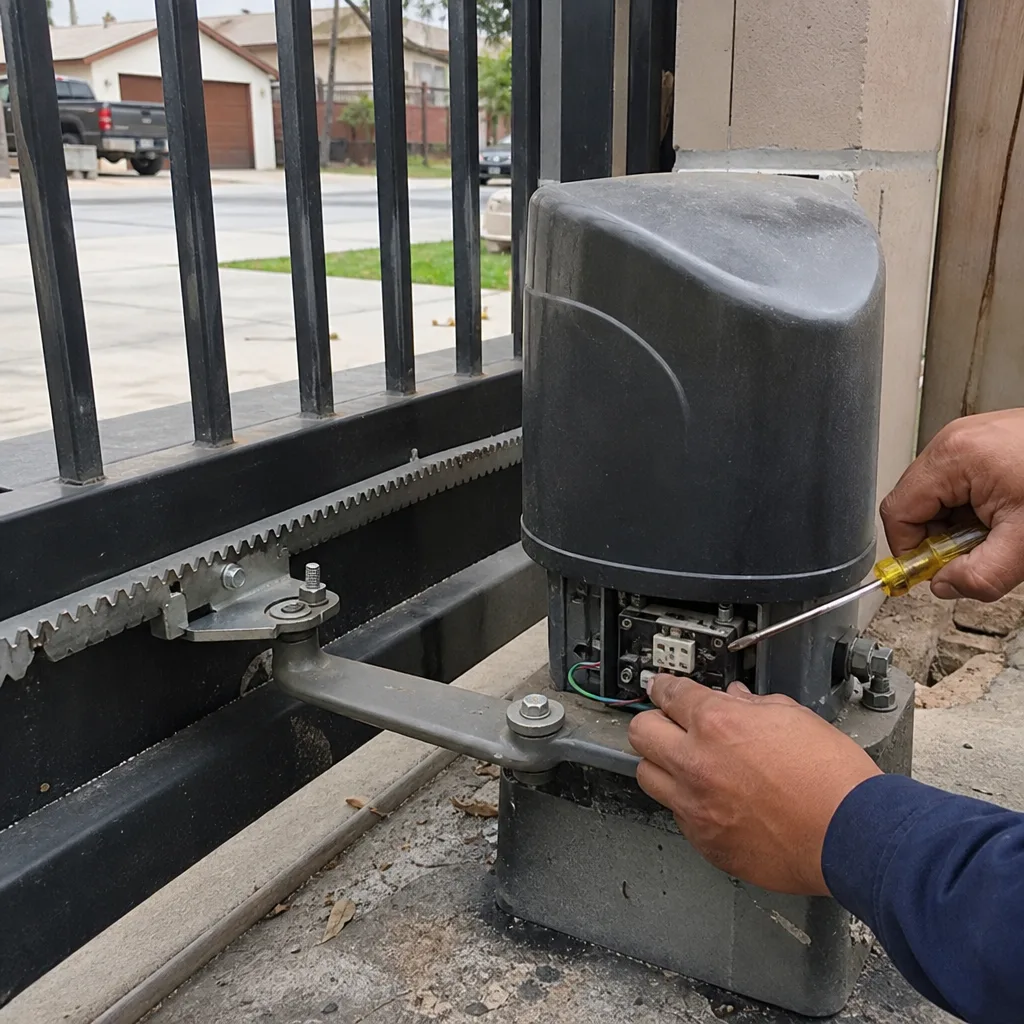
When a gate motor stops responding in a South Gate neighborhood like Hollydale or Tweedy, the fix is typically a component replacement: a capacitor, a control board, a limit switch. None of that crosses the permit threshold. It is our Gate Repair services at work. If you are not sure whether your specific repair falls into this category, ask the technician to explain exactly what parts will be replaced and whether any structural or panel wiring changes are planned. A specialist who answers that question clearly is worth keeping.
UL 325 Explained: The Safety Standard Behind Automated Gates
UL 325 exists because automated gates have killed people. The standard sets minimum safety requirements for gate operators installed after a certain date, and it applies to both residential and commercial gates in California. Understanding the basics helps you evaluate whether your existing gate is actually safe, even when it opens and closes without complaint.
For residential automated gates, UL 325 requires two primary safety mechanisms: an inherent entrapment protection system (usually a motor clutch or current sensing system that stops and reverses when the gate hits resistance) and a secondary entrapment protection device such as photo eyes or a contact edge. Commercial gates face stricter requirements: they must have monitored safety devices that signal the operator when they fail, and they face lower force limits.
Here is what UL 325 means in practical terms for a South Gate property owner:
- A gate should reverse when it meets resistance. If it keeps pushing, the entrapment protection has failed or was never proper.
- Photo eyes should be installed where a child could enter the gate’s path. If the beam is broken, the gate must stop and reverse.
- Contact edges on any gate that closes against a fixed object are mandatory on most modern installs. If your gate closes against a post or wall with no edge sensor, it is not UL 325 compliant.
- Commercial gates need monitored photo eyes. If a commercial gate’s safety sensor stops working, the gate should fail to a safe condition: refuse to close automatically or open to a default position.
We work on LiftMaster, BFT, Linear, Viking, and Ghost Controls operators regularly, and across those five brands the UL 325 implementation varies slightly. Some use current sensing with adjustable force settings. Others rely on external monitored photo eyes. When we service an electric gate in South Gate, verifying that the UL 325 safety features are present and functional is part of the job, because a gate that works fine but lacks compliant safety devices is a liability waiting for an accident.
How the Permit Process Works in the City of South Gate
If your gate project crosses the permit line, the process in South Gate follows a predictable sequence. Knowing the steps before you start saves weeks of delay.
- Determine the permit type. Gate structural work usually falls under a building permit. Electrical panel work falls under an electrical permit. Some projects need both. The South Gate Building and Safety Division is the first point of contact, and staff there will tell you which permits apply. The department sits within the city’s Community Development office.
- Prepare a site plan. For structural work, the city wants a site plan showing the gate’s location, dimensions, swing or slide path, and proximity to property lines. For a slide gate, the plan must show the full track length and the gate’s open position. Simple hand-drawn plans are often acceptable for residential work.
- Submit the application. South Gate processes permit applications through its Community Development counter. Expect to pay a permit fee based on the project valuation. Smaller gate projects typically fall into a flat-fee tier. The city’s current fee schedule is available on its official website.
- Wait for review. Residential gate permits in South Gate usually process in one to three weeks, depending on workload. Commercial projects take longer because they involve plan review by both building and planning staff.
- Pass the inspection. After the work is done, a South Gate building inspector visits the site. The inspection covers footing depth for any new posts, the gate’s movement, and UL 325 safety devices if an automated operator is involved. If the inspector flags something, you fix it and schedule a re-inspection.
The inspection is not a formality. South Gate inspectors verify that posts are set deep enough for the gate’s weight, that the gate does not encroach on the public right-of-way, and that automated gates have functional safety devices. Fail the inspection on a commercial gate, and the city can order the gate taken out of service until compliance is achieved. For property managers overseeing multi-unit buildings, that means tenant complaints and security gaps until the re-inspection passes.
If you are considering a new gate, our Gate Installation in South Gate page walks through what a full project involves.
The Insurance Consequences of Unpermitted Structural Work
Here is the part most guides skip. If you modify a gate structurally without a permit, and that gate later fails and injures someone, your property insurer can deny the claim. The denial is not based on the injury itself. It is based on the fact that unpermitted structural work constitutes a material change to the insured property that the insurer never agreed to cover.
California insurers write policies that exclude damages arising from unpermitted construction. The exclusion language varies, but the principle is consistent: if you moved a gate, relocated posts, or changed the gate’s weight without city approval, the insurer can argue that the loss arose from a condition they never underwrote. A child injured by a falling gate that had unpermitted post modifications is exactly the scenario claims adjusters look for. The homeowner’s policy may pay nothing for medical costs, and the property owner is personally exposed.
Commercial property owners face the same problem at a larger scale. An HOA that modifies an entry gate without a permit, and later has an accident, risks the association’s liability coverage. Board members can face individual claims. The permit fee for a gate project is usually a few hundred dollars. The liability from an unpermitted structural failure can run into six figures. The math is not close.
The same logic applies in reverse: when you hire a contractor who pulls the permit, the work is documented, inspected, and code-compliant. That documentation is your protection if something goes wrong later. South Gate property owners should treat a contractor’s willingness to pull a permit as a qualification test, not an inconvenience. A specialist who resists the permit process on structural work is telling you something about how they run their business.
How to Verify a Contractor’s Permit Claim
Contractors tell homeowners “we don’t need a permit for this” every week in South Gate. Sometimes they are right. Sometimes they are wrong. Sometimes they are avoiding the permit because it costs time and exposes unlicensed work. You can verify the claim yourself before any work begins.
- Call South Gate Building and Safety. Describe the work in plain language: “I’m replacing a swing gate with a slide gate and moving a post.” Staff will tell you if a permit applies. The city’s Community Development department is the point of contact. This call costs nothing and takes ten minutes.
- Ask for the contractor’s license number. In California, any contractor performing work over $500 requires a state contractor’s license. Verify the license at the Contractors State License Board website. The license should list the correct classification. Gate work typically falls under C-61 (limited specialty) with a D-28 door and gate subclass, or under a general building license for larger projects.
- Ask which code section they are relying on. A contractor who says no permit is needed should be able to explain why. If they cite “it’s just a repair” without referencing what specific work falls outside the permit requirement, be suspicious. California’s permit triggers are well documented. A specialist knows them by section number.
- Get the permit decision in writing. If the contractor insists no permit is required for work that sounds structural, ask them to put that in writing on their invoice or estimate. Their willingness to document the claim tells you how confident they are in it.
- Check South Gate’s published permit requirements. The city maintains permit guidelines on its official website. The guidelines list the types of work that require a permit. If your project appears on that list, no contractor’s verbal assurance overrides it.
The goal is not to make the contractor’s life harder. It is to protect yourself from a stop-work order, a failed inspection, or an insurance denial. A reputable specialist welcomes the verification. We have advised South Gate property owners to check permit requirements directly for years. The answer is almost always clear once someone with the actual say explains it.
Common Mistakes to Avoid
- Assuming all gate work is permit-free. Some South Gate property owners treat gate work like hanging a picture. Structural modifications, post relocations, and panel wiring are regulated. Assuming otherwise is how projects get red-tagged.
- Trusting a verbal “no permit needed” without verification. A contractor’s word is not a legal opinion. Confirm with South Gate Building and Safety before work starts on anything structural or electrical.
- Skipping UL 325 verification on an existing gate. A gate that opens and closes fine is not necessarily a safe gate. If the photo eyes are dead or the force limit is set too high, the gate is a hazard even when it works.
- Modifying a gate’s swing arc without checking property lines. Changing the hinge position so the gate swings over a neighbor’s property line creates an encroachment. South Gate enforces property line setbacks, and a complaint forces the work to be undone or redone with permits.
- Replacing a solid gate with a heavier one without resizing posts. The old posts were sized for the old gate’s weight. A heavier gate on undersized posts fails at the base, usually within the first year. This is structural work, and it needs a permit and properly sized footings.
- Ignoring electrical load on a shared circuit. Adding a gate operator to a circuit that already powers pool equipment or outdoor lighting trips breakers and wears out the operator. A dedicated circuit needs an electrical permit. Skirting the permit means living with a gate that fails every time the circuit overloads.
- Hiring a generalist for a specialized gate system. A fencing contractor who installs gates as a side service may not know UL 325 requirements for automated systems or how to program Viking and BFT control boards. The result is a gate that works until it does not, and safety features that were never set up.
When to Call a Professional
Some gate work is genuinely DIY-appropriate. Replacing a keypad battery, greasing hinges, or tightening a loose bolt does not require help. But the scenarios below call for a specialist. If your gate is binding against a post and you suspect the post has shifted, do not attempt to re-anchor it yourself.
If your automated gate reverses erratically or closes with noticeable force, the entrapment protection needs diagnosis. Working on gate operators involves high-force springs, heavy panels, and line voltage wiring. The springs and tension systems on large slide and cantilever gates store enough energy to cause serious injury. We do not recommend any DIY disassembly of gate operators or torsion systems. The same respect applies to any work involving panel wiring: if it is not a low-voltage accessory swap, a licensed electrician or a gate specialist should handle it.
Call us when the gate will not open, the motor hums but nothing moves, or the safety sensors are not responding. Gate Repair South Gate offers free estimates in South Gate. Call (833) 620-0289 and we will tell you honestly whether the work needs a permit before anything is scheduled.
Frequently Asked Questions
No, replacing a gate motor or operator with a compatible unit does not require a permit in South Gate, provided the new operator does not require new wiring from the electrical panel. Replacing the operator on an existing dedicated circuit is considered a component swap. If the installation requires a new circuit or breaker, an electrical permit applies. Call (833) 620-0289 to confirm your specific situation.
Gate permit fees in South Gate vary by project valuation and permit type. Residential gate structural permits typically fall into the city’s flat-fee tiers, which are published in the current fee schedule available from the Community Development department. Expect to pay a few hundred dollars for a typical residential gate project. Commercial projects cost more because they require additional plan review. The city can quote an exact fee based on your project scope.
UL 325 is a safety standard that applies to all automated gate operators installed or modified after the standard’s effective date. It requires entrapment protection devices like photo eyes, contact edges, and force-limiting systems. Any automated gate in South Gate, residential or commercial, should have UL 325-compliant safety devices. A gate without them is a hazard regardless of whether it works correctly.
Yes, California property insurers can deny claims arising from unpermitted structural modifications. If you move a gate post, change the gate’s size, or alter its weight without a permit, and the gate later fails and injures someone, the insurer may argue the loss arose from an unpermitted alteration they never underwrote. Structural gate work in South Gate should always have the appropriate permit for this reason.
Residential gate permits in South Gate typically process in one to three weeks depending on current workload. Commercial gate permits take longer because they involve additional plan review. The inspection itself is scheduled after the work is complete, usually within a few days of the request. Factor the permit timeline into your project schedule before the gate is dismantled.
South Gate can issue a stop-work order requiring all work to cease until a permit is obtained. For work that does not meet code, the city can order the gate removed or corrected. If the project involves an automated gate without UL 325 safety devices, the city can require the gate to be taken out of service. Fines and re-inspection fees add to the cost. The total is usually far higher than the original permit fee would have been. Call (833) 620-0289 if you’re facing a permit issue on an existing project.
The Bottom Line
Most gate repairs in South Gate need no permit: operator swaps, board replacements, sensor fixes, and keypad changes are all exempt. The line is crossed when the work changes the gate structurally, adds panel wiring, or triggers UL 325 compliance on a new automated system. Know that line, verify any contractor’s permit claim yourself, and treat unpermitted structural work for what it is: a liability you carry personally. The permit fee is small. The exposure from skipping it is not. When in doubt, call South Gate Building and Safety, or call us. We have guided enough South Gate property owners through this process to know exactly where your project sits. For more guides & resources, visit our blog.
For more on the work we do in South Gate, start at the Gate Repair South Gate home page or see our specific electric gate repair services.
Written by the team at Gate Repair South Gate, serving South Gate since 2013.
See the difference
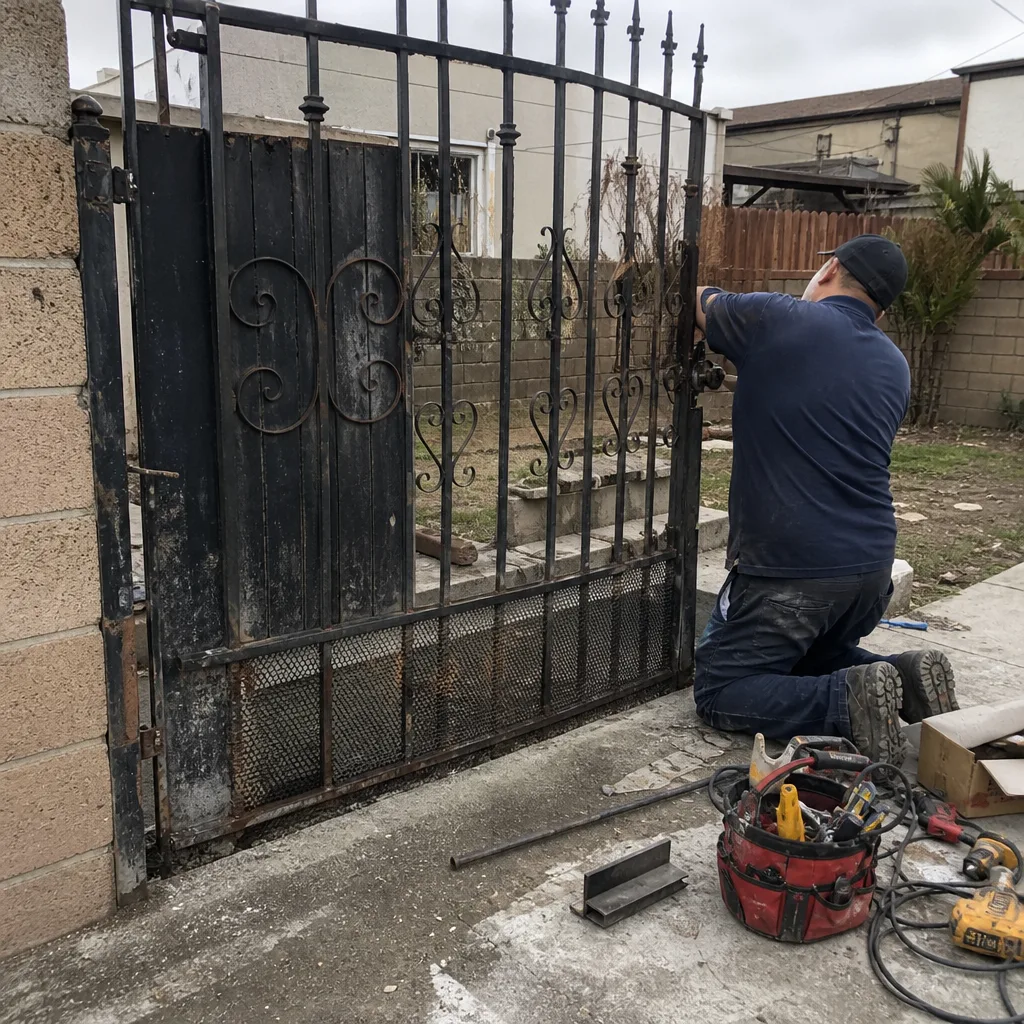 Before
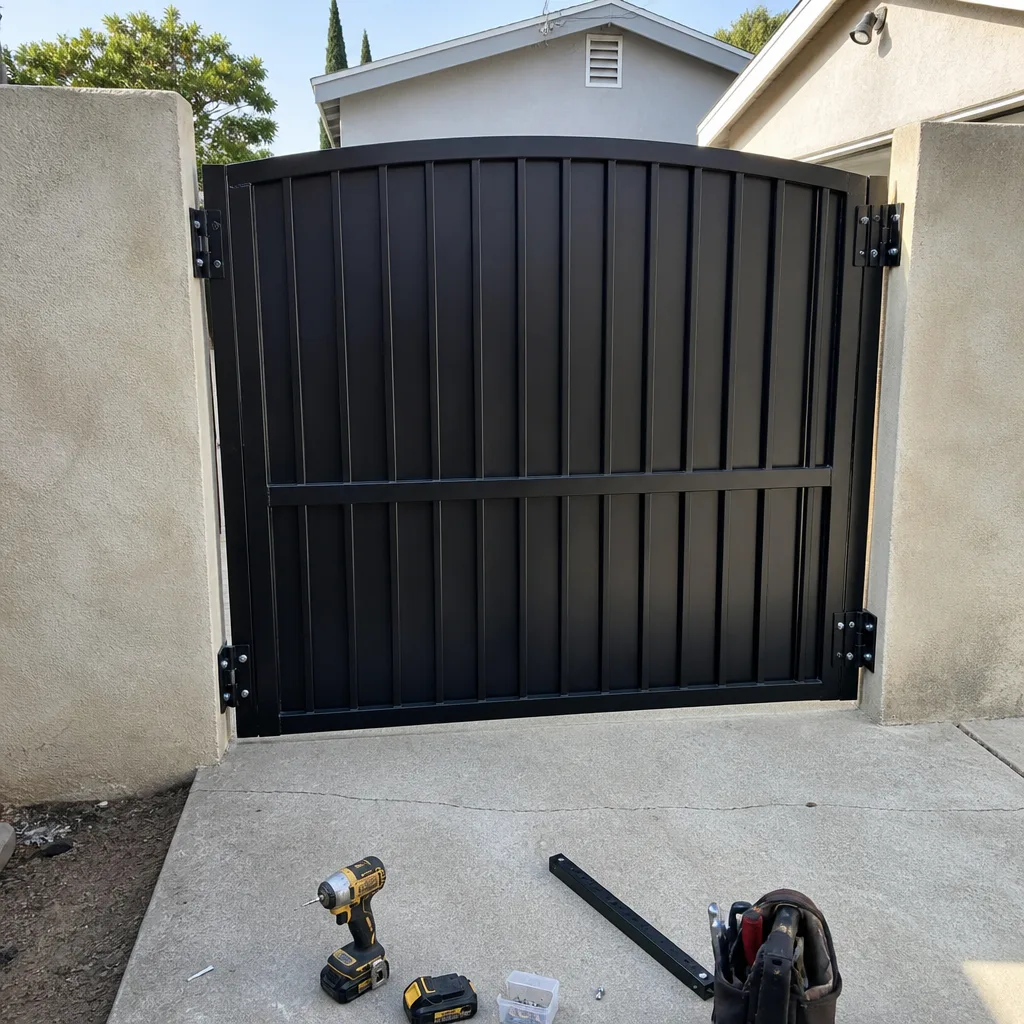 After
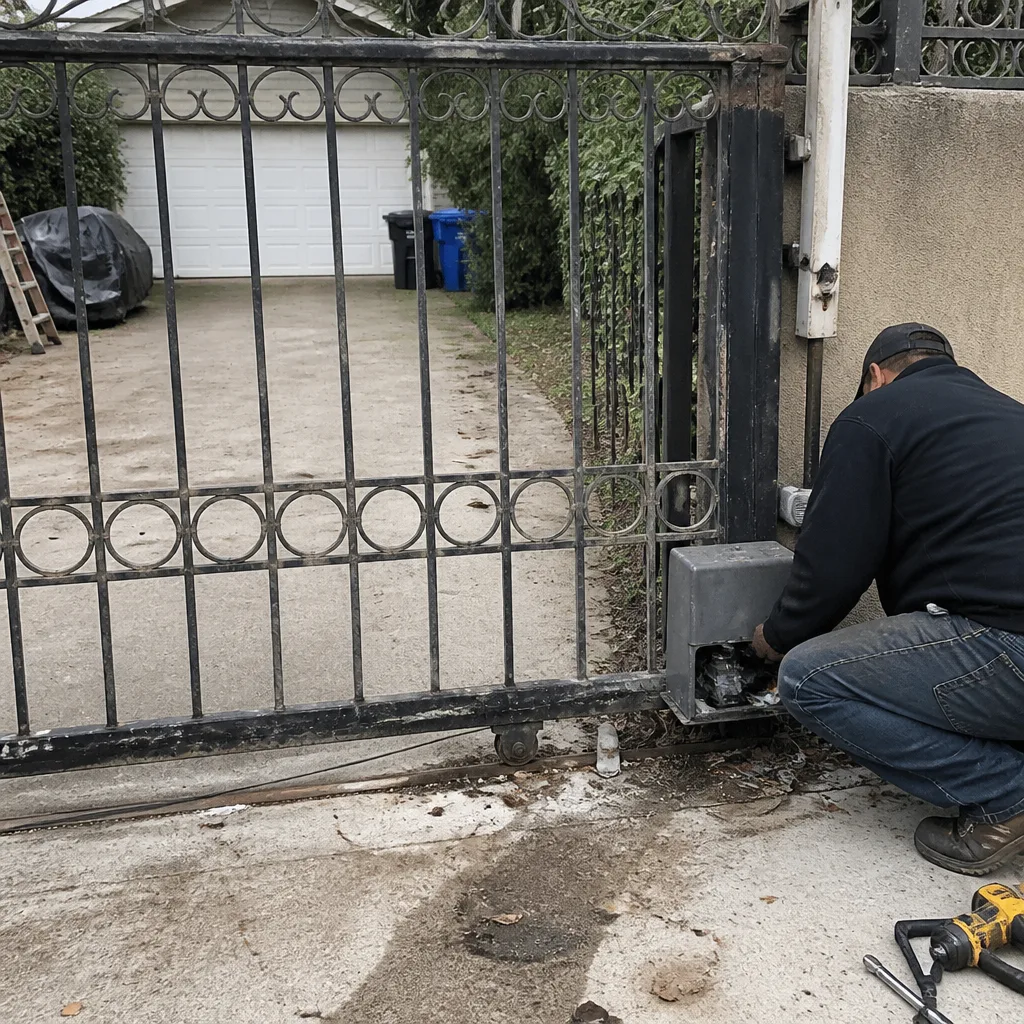 Before
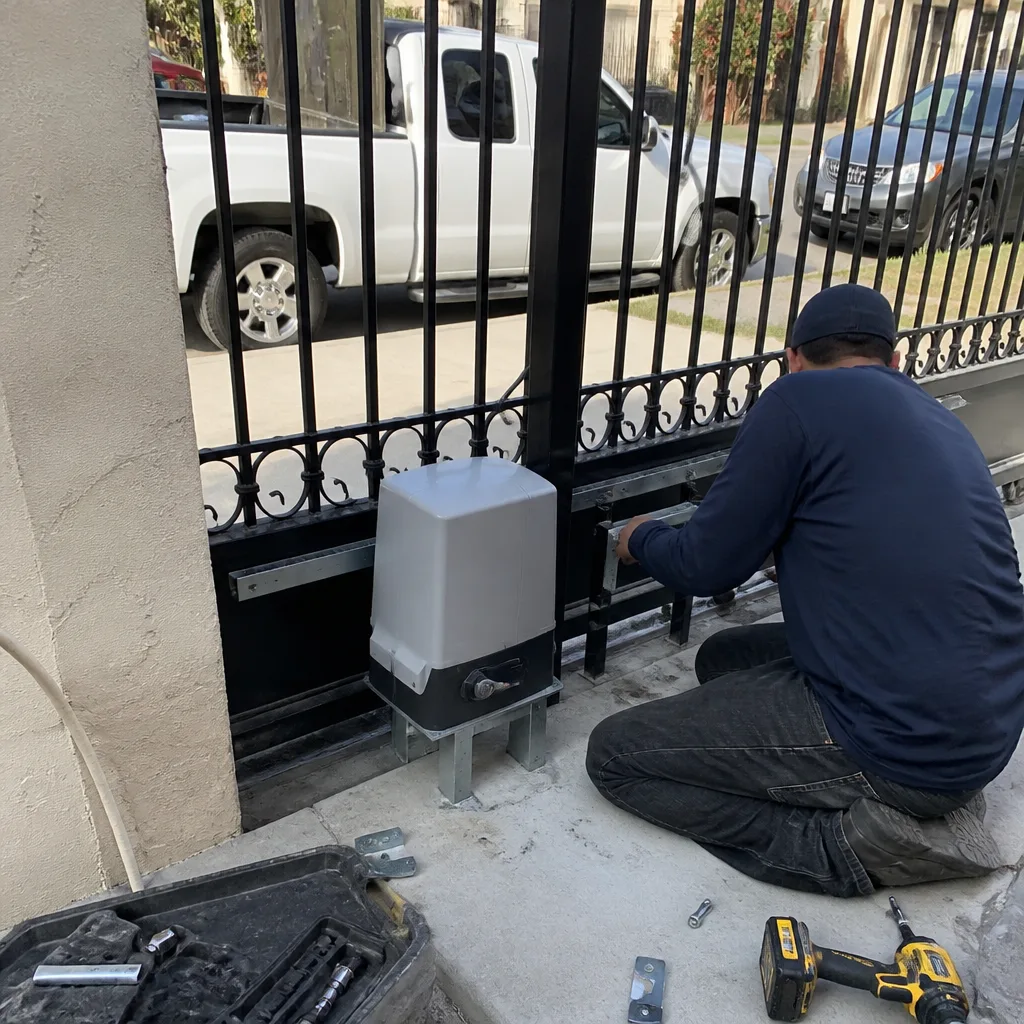 After
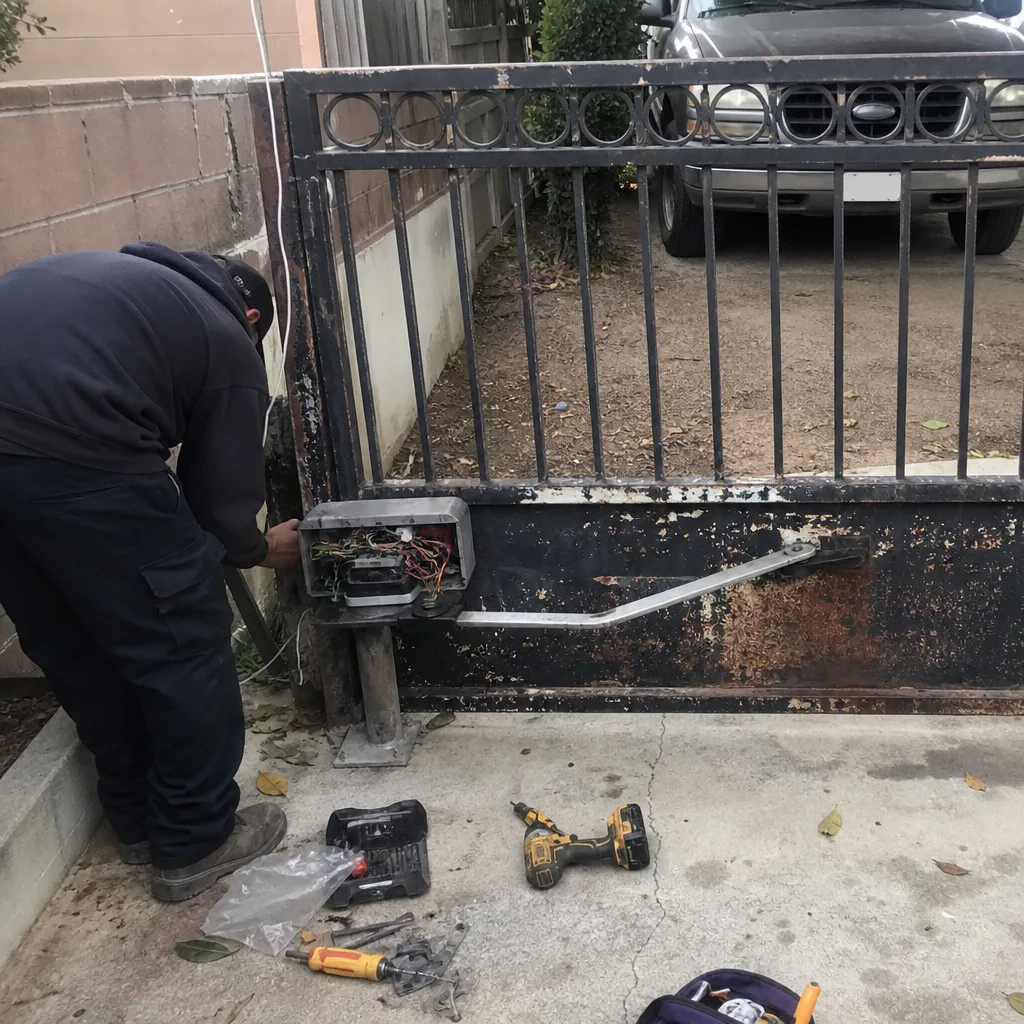 Before
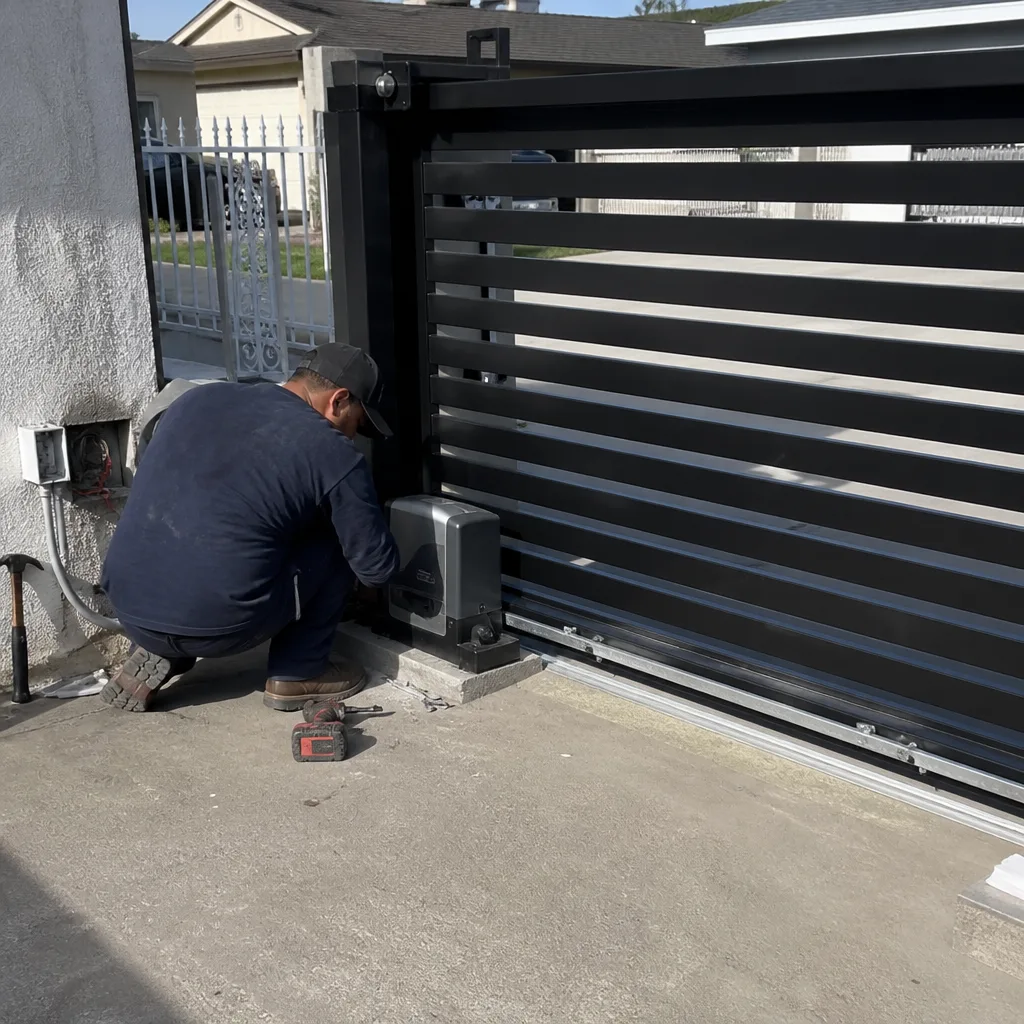 After