
Last updated November 2, 2026
 Wrought iron
 Wood & steel frame
 Farm & ranch
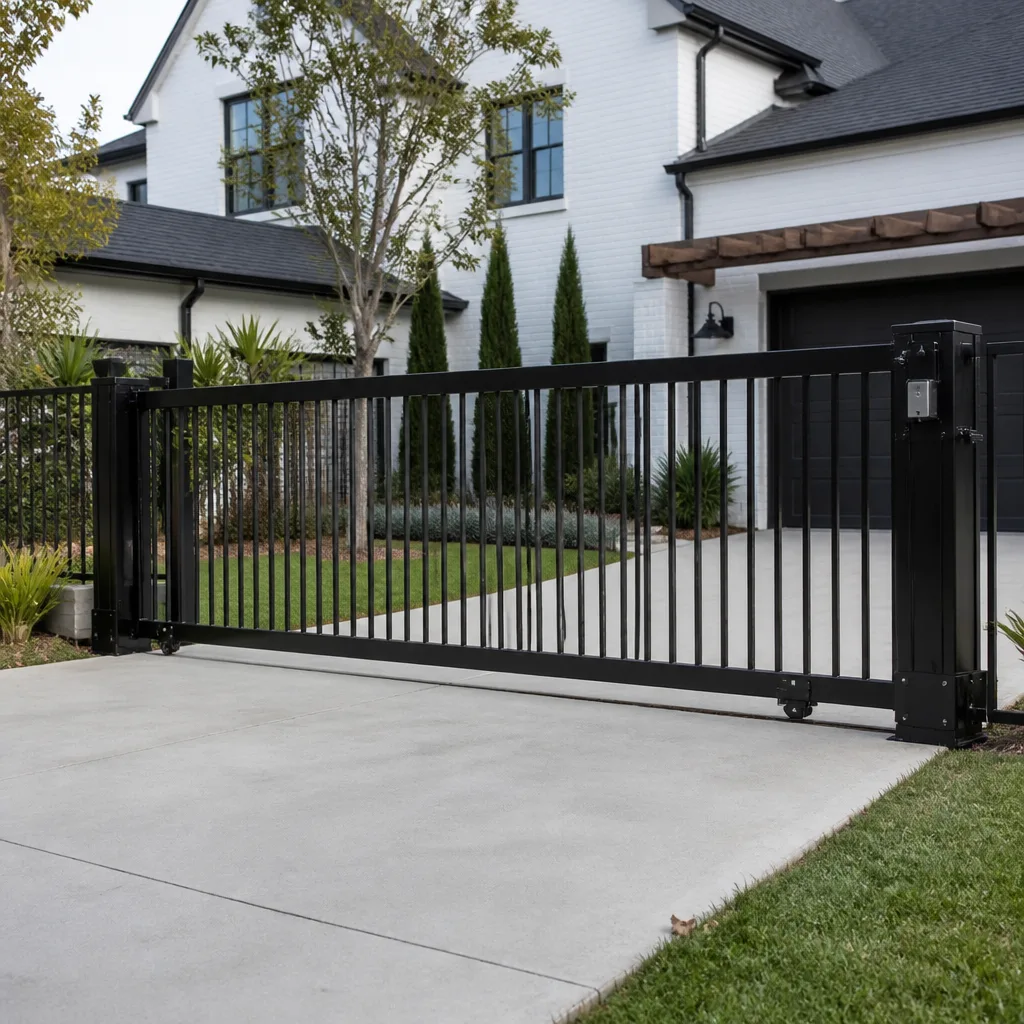 Sliding driveway gates
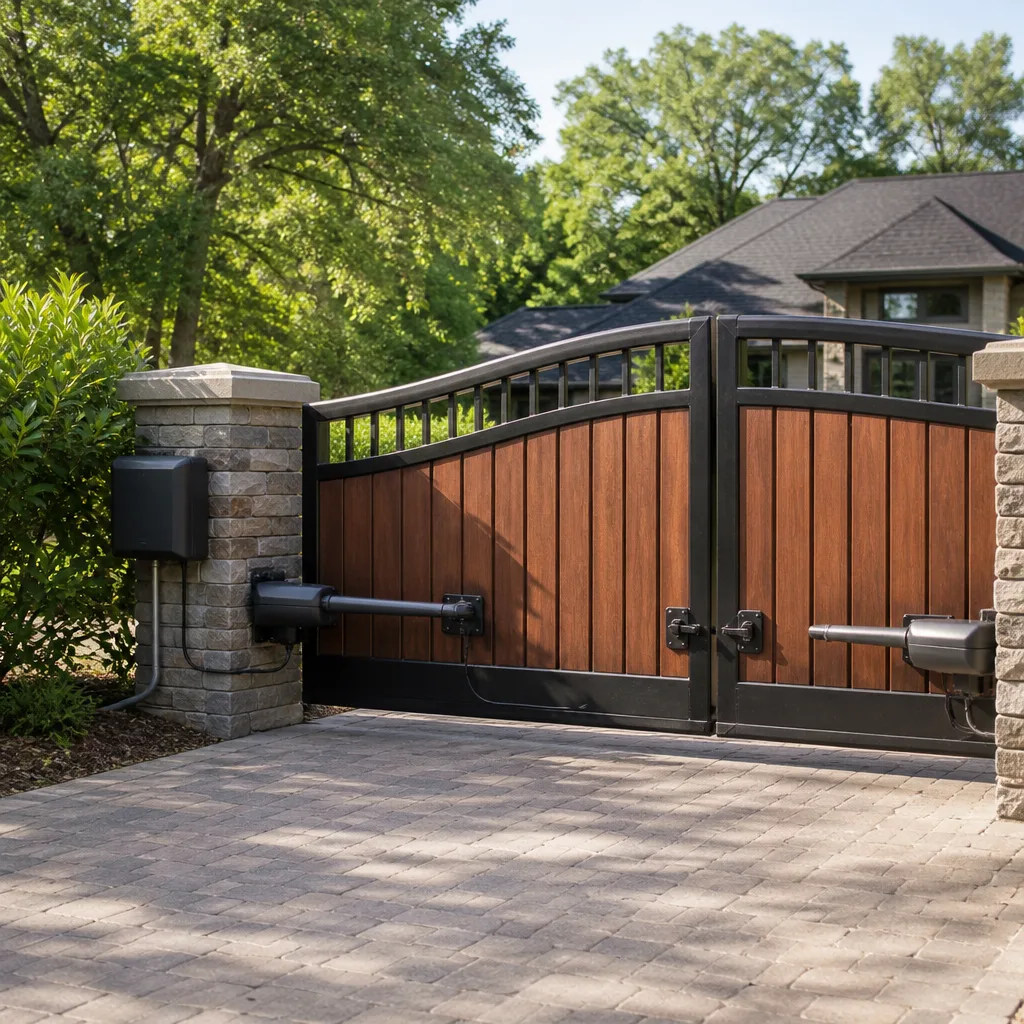 LiftMaster operators
Free on-site gate assessment - hinges, posts, and your LiftMaster or Nice gate operator checked before anything is quoted
The assessment is free and the quote is the invoice.
Get your free estimateGate Repair Emergency Preparedness Guide for South Gate Homes
Every automated gate has a manual release mechanism, but fewer than one in five homeowners in South Gate knows where it is, whether it requires a key, or which direction to pull it. Find that out in a crisis and you’re losing minutes that matter. This guide walks through the full emergency protocol: how to release a stuck gate by hand on the most common operator brands in the area, what a battery backup actually covers during a power outage, when a stuck gate becomes a fire egress problem, and how to set up a contact with our Gate Repair services before you ever need one.
Quick Answer
Emergency gate repair in South Gate starts with knowing your manual release. For swing gates, find the release handle or key on the operator and pull or turn it to disengage the motor, then push the gate leaf open by hand. For slide gates, look for the release on the motor housing, disengage, then walk the gate along its track. If the gate won’t budge after release, the problem is mechanical, not electrical, and you need a gate specialist with tools, not YouTube.
Styles & brands we work with
- Wrought iron
- Wood & steel frame
- Farm & ranch
- Sliding driveway gates
- LiftMaster operators
Table of Contents
- How to Manually Release a Stuck Gate: Slide vs. Swing
- Building a Property-Specific Emergency Gate Card
- Power Outage Protocol: What Battery Backup Actually Covers
- When a Stuck Gate Becomes a Fire Egress Emergency
- Setting Up an Emergency Contact Protocol
- Brand-Specific Emergency Notes: Viking, DoorKing, Ghost Controls, Elite
- Common Mistakes to Avoid
- When to Call a Professional
How to Manually Release a Stuck Gate: Slide vs. Swing
This is the single most useful skill a South Gate homeowner with an automated gate can have. The manual release exists on nearly every operator, but the mechanism differs depending on whether your gate slides or swings. Both are common in South Gate: swing gates dominate single-family driveways in older neighborhoods near Tweedy Boulevard and the 710 corridor, while slide gates are typical on newer multi-unit properties and in the industrial-adjacent stretches near the Los Angeles River.
Before touching anything, understand what the release does. It separates the motor from the gate leaf so you can move the gate by hand. It does not fix whatever caused the failure. It buys you access in and out, and nothing more. When we respond to emergency calls in South Gate, the homeowners who used their manual release correctly are the ones who still got in and out for the day. The ones who didn’t are the ones who had to climb a wall or wait hours for a gate technician.
Swing Gate Manual Release: Step by Step
- Locate the operator. On a swing gate, it’s the box mounted near the gate hinge post, about knee height, with the metal arm connected to the gate leaf. Look for a small handle, lever, or key cylinder on the operator housing.
- If there’s a key cylinder, insert the key (usually stored near the opener, in a kitchen drawer, or on a hook by the interior gate walkway) and turn it a quarter turn. If there’s a pull handle, pull it firmly outward or downward until you feel the arm disengage from the motor.
- On Viking and Elite swing operators, the release is typically a red or yellow T-handle that you pull straight away from the gate. On DoorKing swing arms, look for a small release lever on the underside of the arm itself near the elbow joint.
- Once disengaged, the gate leaf swings freely. Push or pull it slowly. Swing gates are heavy. A 12-foot composite or iron leaf can weigh 400 to 700 pounds. Lean into it gradually and stop if it binds or scrapes.
- If you cannot get the gate to move with moderate force, the gate is binding on its hinges, the foundation has shifted, or the arm itself has seized. Stop. Forcing a bound gate damages the operator, the gate frame, and sometimes the hinge welds. That’s a mechanical repair, not a release problem.
When you reengage the operator later, make sure the gate is back in the fully closed or fully open position matching where the operator thinks it is. Misaligned reengagement is the number one cause of a technician showing up to a gate that “broke again” but is actually just out of sync with its motor.
Slide Gate Manual Release: Step by Step
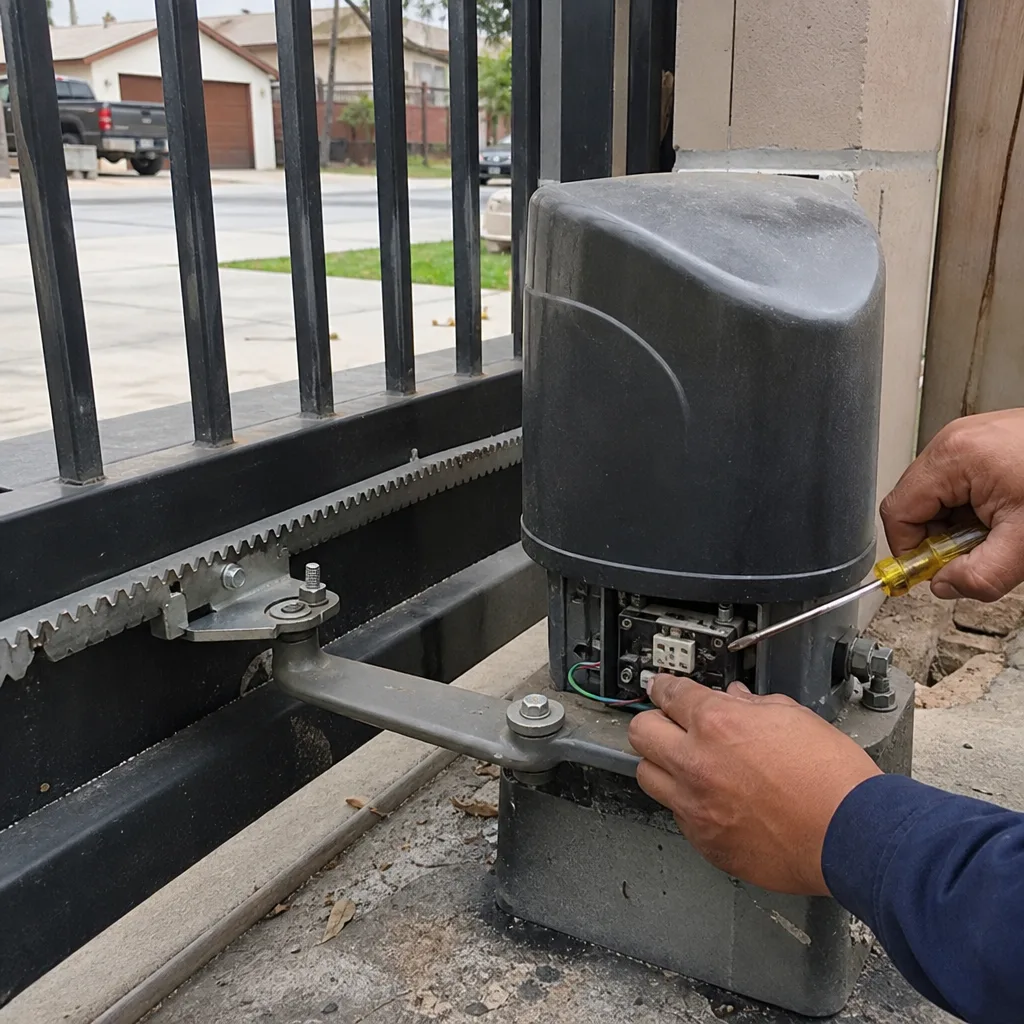
- Find the motor. On a slide gate, the operator sits near one end of the gate, usually inside a steel or aluminum cabinet bolted to a concrete pad. Open the cabinet door. Most have a simple latch; some require a hex key or a screwdriver.
- Inside the cabinet, look for a release handle. On Ghost Controls slide operators, it’s a small red lever near the drive sprocket. On BFT and Viking slide operators, look for a black T-handle or a chain release located near the motor base.
- Pull the release lever or handle. You’ll hear a click or feel a slight pop as the drive gear disengages from the rack or chain. The gate is now free to roll.
- Walk the gate along its track. Slide gates roll on wheels in a track or on a cantilever roller system above the ground. Gravity does a lot of the work, especially on a slight slope. Keep one hand on the gate at all times.
- Watch the track as you move the gate. If the gate stops after a foot or two and won’t roll further, you have a track obstruction, a collapsed roller, or a bent rail. Stop pushing. A derailed slide gate will fall over if forced hard enough off its rollers.
Slide gates fail differently than swing gates in one important way: the release mechanism is usually inside a locked cabinet, which means you need the key or the hex tool in advance. If you have a Ghost Controls or DoorKing slide operator in South Gate and you haven’t opened that cabinet since the installer left, do it this weekend. Before you need to.
If you’re anywhere in South Gate and your gate has failed in a way that the manual release can’t solve, our team at Gate Repair in South Gate handles emergency calls for stuck gates, dead motors, and seized hardware. We’ve released and repaired every operator type above in neighborhoods throughout the city.
Building a Property-Specific Emergency Gate Card
You’ve probably heard of a fire escape plan. You should have a gate escape plan too. It takes fifteen minutes to build, it lives near your front door or in your breaker panel area, and it solves the single biggest problem we see on emergency calls in South Gate: nobody on the property knows how to operate the gate manually when the power is out and the motor is dead.
An emergency gate card is a single laminated sheet, usually 5×8 or letter size, taped to the inside of a kitchen cabinet, posted near the electrical panel, or kept with the house keys. It records everything a person needs to get the gate open or get help fast. Here’s what goes on it.
What to Record on Your Emergency Gate Card
- Brand and model of the gate operator. This is printed on a label on the motor or the inside of the cabinet. If you can’t read it, take a photo of the label now and print it on the card.
- Gate type: swing or slide. Write it big. Swing and slide releases work differently, as covered above.
- Manual release location and type. Example: “Red T-handle on operator box near hinge post. Pull outward. No key needed.” Or: “Key cylinder on cabinet. Key hangs on hook in laundry room.”
- Battery backup location and status. If your operator has a battery backup, note where the battery sits and the date it was last replaced. Battery backups degrade. A five-year-old battery may give you ten cycles or two.
- Power source and breaker number. Find the breaker that feeds the gate operator and write the panel number on the card. If the gate is on a dedicated circuit, note it. Resetting a tripped breaker solves a surprising number of “emergency” calls.
- Gate repair emergency contact. Name and phone number of the gate specialist you’ve pre-arranged for after-hours calls. Twenty digits of phone number beats a frantic Google search at 2 a.m.
- Property manager or owner contact for rental and multi-unit properties. Tenants should know who to call. The gate card is where that lives.
Laminating matters. South Gate summers hit triple digits and un-laminated sheets curl and fade. Or store it in a clear plastic sleeve taped inside a cabinet. Some multi-unit property managers in South Gate post a simplified version near the pedestrian gate so all residents can see it daily.
Who needs access to the card? Every adult resident. Your tenants, if you own a rental. The property manager and maintenance person, if you have them. And a copy in the hands of any neighbor you trust with a spare key. We’ve seen that last one save a house call more than once.
Power Outage Protocol: What Battery Backup Actually Covers
South Gate is not a rolling blackout hotspot like some inland areas of Los Angeles County, but the grid here takes hits from heat waves, Santa Ana winds, and the occasional transformer failure in the older utility corridors near Firestone Boulevard. When the power drops, your automated gate goes dark unless it has a battery backup. For Gate Repair Maintenance Checklist for South Gate Homeowners, battery backup is the most misunderstood component we encounter.
What Battery Backup Does
- It runs the gate operator for a limited number of open-close cycles. Not indefinitely. A healthy battery on a single-family swing gate with a Viking operator might give you 15 to 30 cycles. A degraded battery might give you 5.
- It does not power keypads, intercoms, or access control systems unless those are on their own battery circuits. Most are not. The gate moves, but the keypad is dead. That means manual release or a keyed bypass becomes your only entry method.
- It does not power safety sensors indefinitely. Photo eyes and edge sensors draw power. As the battery drains, the first thing to go is usually the safety circuit, which triggers the operator to refuse to move. A backup battery at 10% charge will often lock the gate in place as a fail-safe rather than run it without safety sensors.
- It degrades with heat and age. South Gate temperatures and the direct sun on operator cabinets shorten battery life. A battery that lived in an El Cajon cabinet in full afternoon sun for four years is basically a paperweight.
Here’s the practical protocol. When the power goes out, assume the gate has maybe 5 to 10 good cycles if it has a backup battery, and zero if it doesn’t. Use them wisely. If you need to leave and you have a functioning manual release, use the release instead of burning battery cycles. If the power outage is expected to last more than a few hours, manually release the gate and leave it that way, securing it with a chain and padlock if security is a concern. That’s what we tell property managers in South Gate to do during fire season wind events, and it saves the battery and the operator from low-voltage fault codes.
If your gate operator has no battery backup at all, plan for total loss of function during any outage. That means the manual release is your only option. This is worth checking now, before the next heat wave. Open the operator cabinet, look for a battery module (usually a rectangular box with two wires and a small circuit board), and note whether it’s there. If not, and you want backup power for your gate, talk to a gate specialist about adding it. It’s one of the most requested upgrades we handle from our Electric Gate Repair in South Gate service line, and for good reason: a two-day outage without a functioning gate is a real cost in time, security, and sleep.
When a Stuck Gate Becomes a Fire Egress Emergency
A gate that won’t open is an inconvenience most days. On the day a fire starts uphill from your property, it’s a safety hazard. South Gate sits in a dense urban grid with homes packed close together. A walled property with a stuck gate and no secondary pedestrian exit means residents can be trapped inside the perimeter. Fire crews carry tools to force gates, but forcing a gate takes time, and time matters when a structure fire is moving.
Los Angeles Fire Department access requirements are specific for gated properties in the region, and South Gate Fire Department enforces them locally. Properties with walls over 6 feet and a gated driveway are required to maintain emergency access openings. Automated gates in LAFD jurisdiction need either a key switch accessible from the outside, a siren-activated automatic opener, or a manual release that firefighters can operate from the street side; see Gate Repair Permits, Codes & Inspections in CA: What You Need to Know.
The non-obvious problem we see in South Gate: walled properties where the only pedestrian access is behind the vehicle gate, and the vehicle gate is stuck closed. A firefighter with a K-tool can cut a padlock, but a seized slide gate on a motorized track won’t open with a lock cut. If the gate and the pedestrian door share the same failure, the property is effectively sealed. This is why LAFD and South Gate Fire Department inspect gate egress, and why some property owners get red-tagged after the fact.
What you can do now:
- Confirm you have a pedestrian gate or secondary access that operates mechanically, not electrically. If your only pedestrian access is an electric strike tied to the same dead panel as the gate, you have a problem. Have a keyed manual override installed on the pedestrian gate.
- Know whether your operator has a fire department override. Many Viking, DoorKing, and Elite commercial operators support a siren-activated or key-switch override. If the system was installed more than ten years ago, it may not be connected.
- Keep the manual release accessible from the outside where fire code requires it. This often means a key switch mounted on the exterior column or a tamper-resistant pull point. If you can’t release the gate from the street side, the fire department may not be able to either without hydraulic tools.
- If you’re in a walled property in South Gate and you can’t confirm any of the above, call a gate specialist for a fire egress evaluation. It’s a short service call. The alternative is discovering the deficiency during an actual fire response.
This is the kind of job we take seriously at Gate Repair South Gate home because it’s the rare scenario where gate repair genuinely affects life safety. We can inspect the egress setup, confirm the release operation, and recommend the right fix without trying to sell you a new gate system.
Setting Up an Emergency Contact Protocol
Gates fail at the worst times. Sunday night. The morning before a flight. The holiday weekend. You can’t schedule an emergency. You can prepare for one. The most practical thing a South Gate homeowner or property manager can do is establish a relationship with a gate repair specialist before the emergency happens. Here’s how.
What Information to Have Ready for an Emergency Dispatch
- Brand and model of the gate operator. We mentioned this for the emergency card, but for a phone call it’s even more important. “The gate won’t open” tells a technician nothing. “DoorKing 9150 slide operator, no power at the cabinet, breaker is on” tells us what tools and parts to load.
- Symptom description in one sentence. Gate won’t move at all. Gate moves halfway then reverses. Motor hums but gate doesn’t move. Keypad works but motor doesn’t. These map to different failures: power supply, obstruction sensor, limit switch, capacitor, or gearbox.
- When the failure started and what happened just before it. Power outage, rain, a car hitting the gate, landscaping work near the track, a new tenant using the keypad incorrectly. Context cuts diagnosis time in half.
- Access instructions. Gate codes, locked pedestrian access, dogs on the property, alarm system. If we show up and can’t get to the operator, that’s wasted dispatch time on an emergency call.
- Who can approve the work. On emergency calls, the technician does the diagnosis and quotes the repair before any work starts. If the approving owner or manager isn’t on site, the phone contact needs to answer.
- Forcing a bound gate. If the gate won’t move after you’ve released the manual override, pushing harder will not help. It bends the frame, seizes the hinges, and ruins the operator when you reengage it. On slide gates, forcing a derailed gate risks a full collapse. Stop at the first sign of binding and call a gate specialist.
- Reengaging the operator out of position. The motor tracks the gate position. If you release the gate, push it open, and then reengage the release while the gate is not at its normal closed or open limit, the next power cycle confuses the control board. The gate may sit there dead or slam against its stop. Always return the gate to a matching position before reengaging.
- Ignoring the battery backup replacement date. Backups have a service life. The battery that worked during last year’s outage may not work during this year’s. If you can’t remember when the battery was replaced, replace it. Heat accelerates degradation in South Gate, and a summer outage is the worst time to discover a dead backup.
- Thinking the keypad is independent of the gate motor. It isn’t. When the gate operator loses power, the keypad usually loses power too. Homeowners stand at the keypad pressing buttons during an outage while the gate does nothing. Use the manual release instead.
- Not testing the release until a crisis. The manual release mechanism is meant to be operated once or twice a year to keep it free. Test yours today. If it’s stiff, spray it with penetrating lubricant. If it won’t move at all, call for service before the gate fails.
- Hiding the release key in a place no one can find. “It’s in the drawer with the batteries” doesn’t help at 1 a.m. when you’re stuck outside the gate. Put the key on a hook by the door, label it, and note its location on the emergency gate card.
We recommend property managers and homeowners in South Gate save a gate specialist’s number in their phone under “Gate Emergency.” When the failure hits, you call the number you already have, not the first result from a panic search. You also get better outcomes because the technician already knows your system from the notes on file.
Brand-Specific Emergency Notes: Viking, DoorKing, Ghost Controls, Elite
The manual release procedure above covers the general principles. Here are the brand-specific quirks we see on emergency calls in South Gate, because each manufacturer does the release differently, and knowing your brand saves you fumbling in the dark.
Viking
Viking operators are common on mid-century South Gate homes with original swing gates. The release is often a red T-handle on the operator housing. Pull it until you feel resistance, then pull harder: Viking releases have a detent that needs a firm motion to overcome. The manual release on older Viking models sometimes seizes from corrosion. If the T-handle won’t move, don’t force it with a tool. The internal release rod bends easily, and a bent rod means the operator has to come off for repair. Spray the release pivot with penetrating oil once a year, and you’ll avoid the seized release entirely.
DoorKing
DoorKing is the workhorse of commercial and multi-unit slide gates across South Gate. The release on a DoorKing slide operator is inside the main cabinet: a black knob or lever near the drive chain. Turn the knob counterclockwise and the chain tension releases. DoorKing cabinets are locked with a standard tubular key; if you’re a property manager, every maintenance person on staff should carry one. The emergency release on DoorKing swing arms is located at the elbow joint of the arm, a small lever you pull outward while supporting the gate leaf.
Ghost Controls
Ghost Controls sells directly to homeowners and they’re the most common brand on DIY-installed single-family gates in South Gate. The release is a small red lever inside the control box, which mounts on the gate post or an adjacent wall. On Ghost Controls swing units, the release lever disengages a clutch inside the arm. The box itself opens with no tools on most models: just a latch or a thumbscrew. One note: Ghost Controls systems are more sensitive to obstructed sensors than other brands. If the gate moves a few inches and stops, check the photo eye alignment before assuming the motor is dead.
Elite
Elite operators appear on higher-end residential installations and light commercial properties in the South Gate area. The release on Elite slide operators is typically a black knob on the side of the motor housing. Pull the knob out and twist it to lock the disengaged position. Elite swing arms use a similar release lever to Viking but with a shorter throw. If your Elite operator has a battery backup, it’s usually a separate enclosure wired into the control board, and the battery has its own status LED. Green means healthy. Red or no light means the battery has failed and the gate will not move in an outage.
For any of these brands, the emergency protocol is the same: release first, diagnose second, call a specialist if the gate won’t move by hand. We service all four brands plus five others, and when we handle a Gate Installation in South Gate, we make sure the new operator’s release is shown to the homeowner on the day of install, with the procedure demonstrated, not just described.
Common Mistakes to Avoid
When to Call a Professional
The manual release solves access, not the underlying failure. If the gate motor continues to hum without moving after you reengage the release, the capacitor or gearbox is shot. If the control board resets or the gate reverses mid-travel, the issue is in the sensors or limit switches. If the gate post or track is bent from a vehicle strike, the structural repair is beyond a hand tool fix. And if you’re a property manager in South Gate with a commercial slide gate down during business hours, every hour of downtime costs tenants and customers. Gate Repair in South Gate offers free estimates in South Gate, and our emergency line is (833) 620-0289. We diagnose the exact failure, quote the price before any work starts, and carry parts for the nine major gate automation brands so most repairs happen in one trip.
See the difference
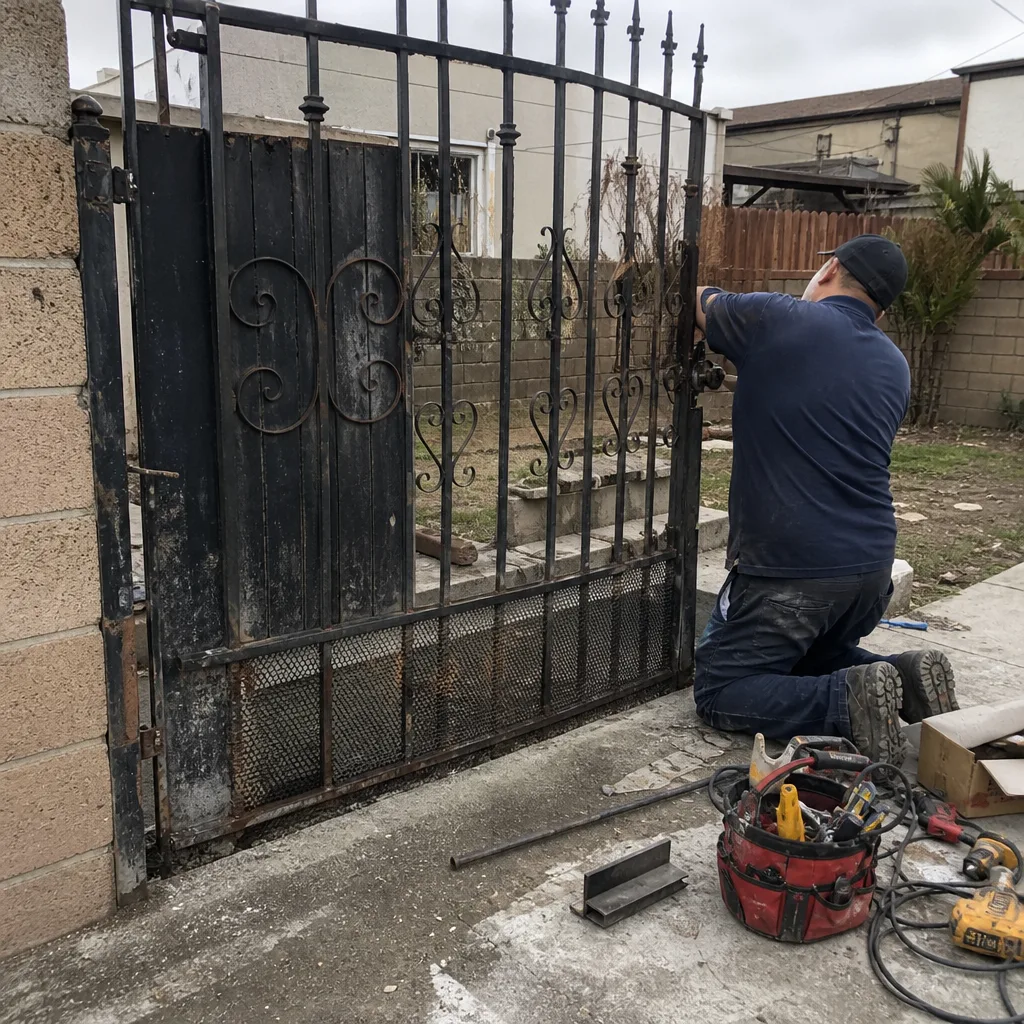 Before
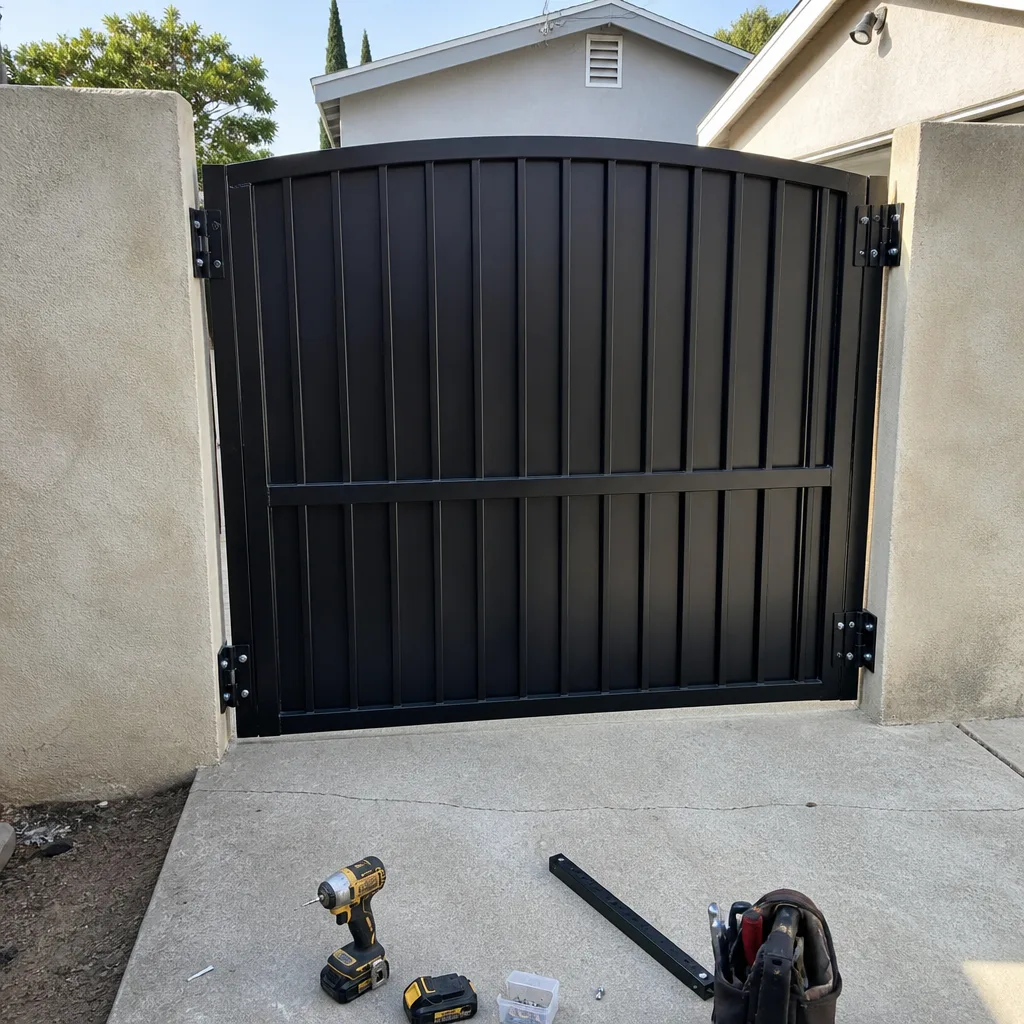 After
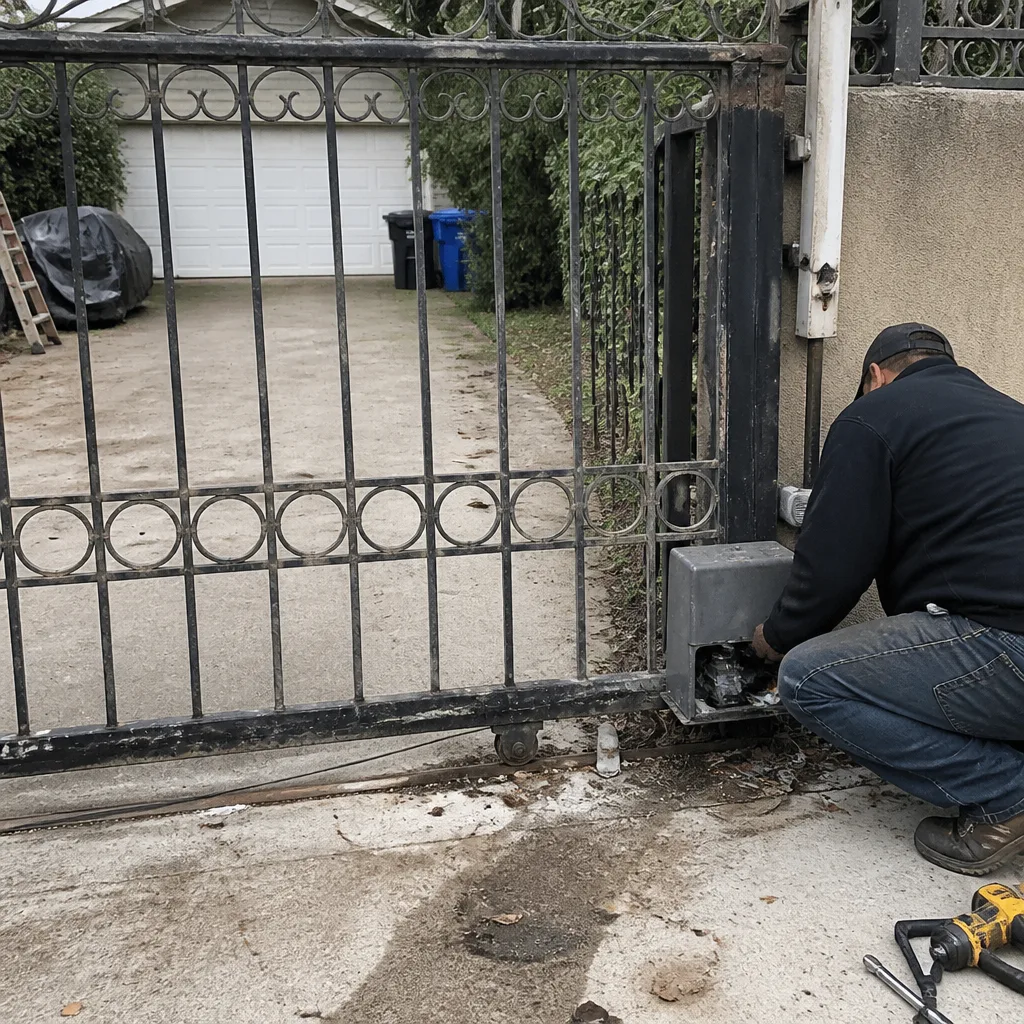 Before
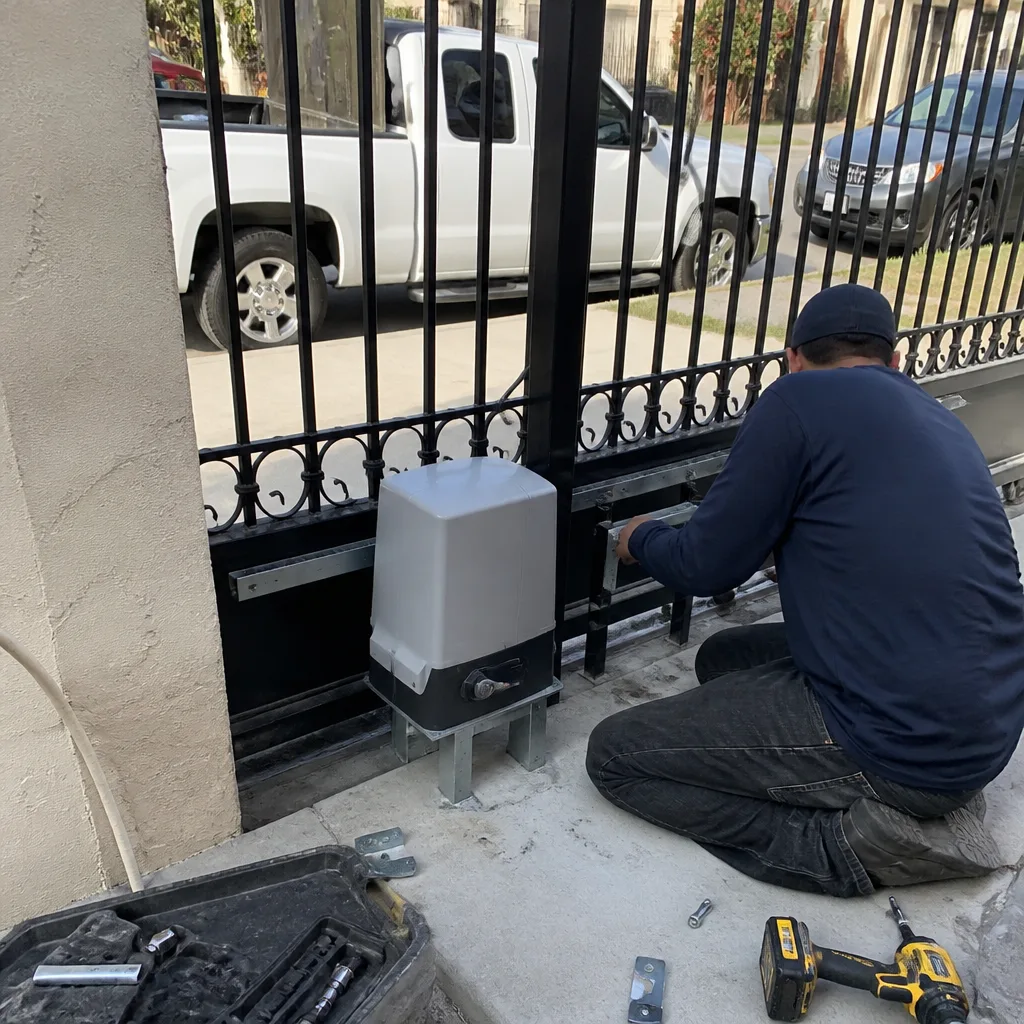 After
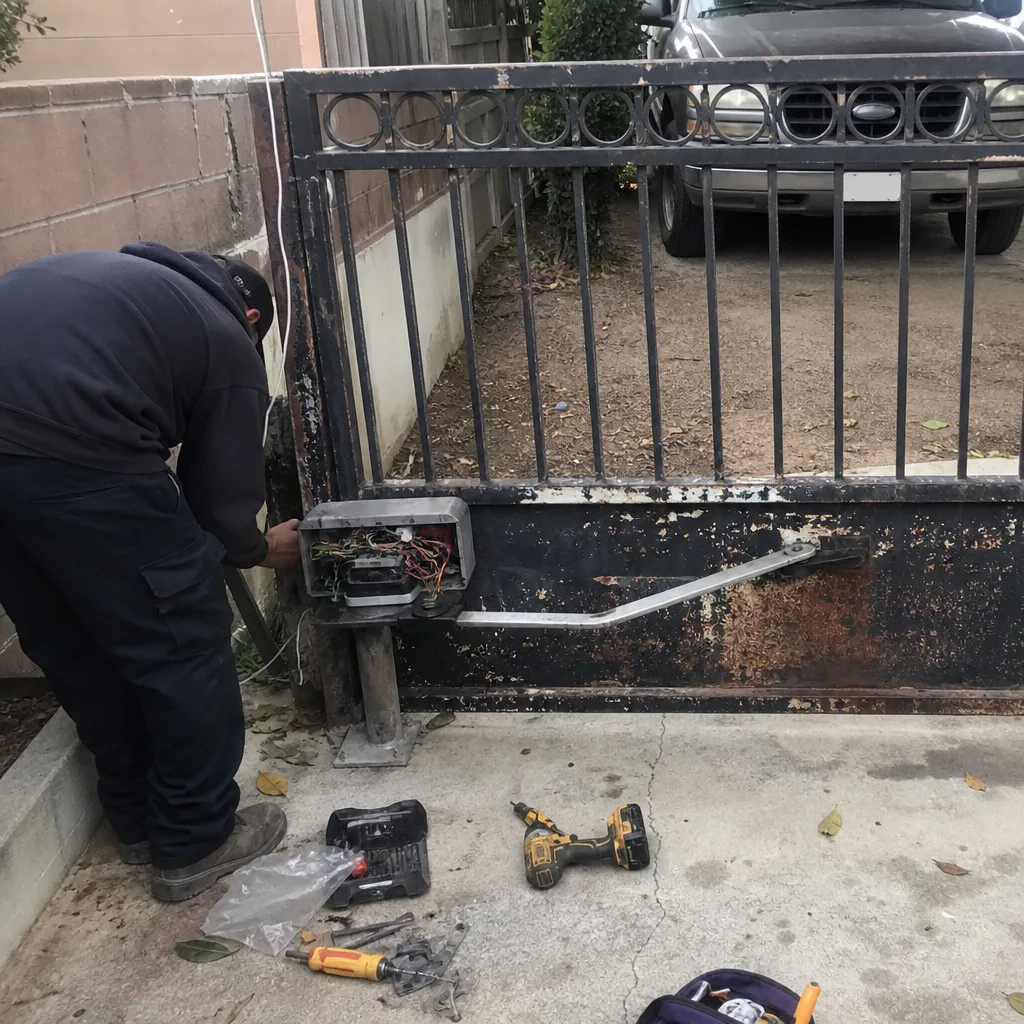 Before
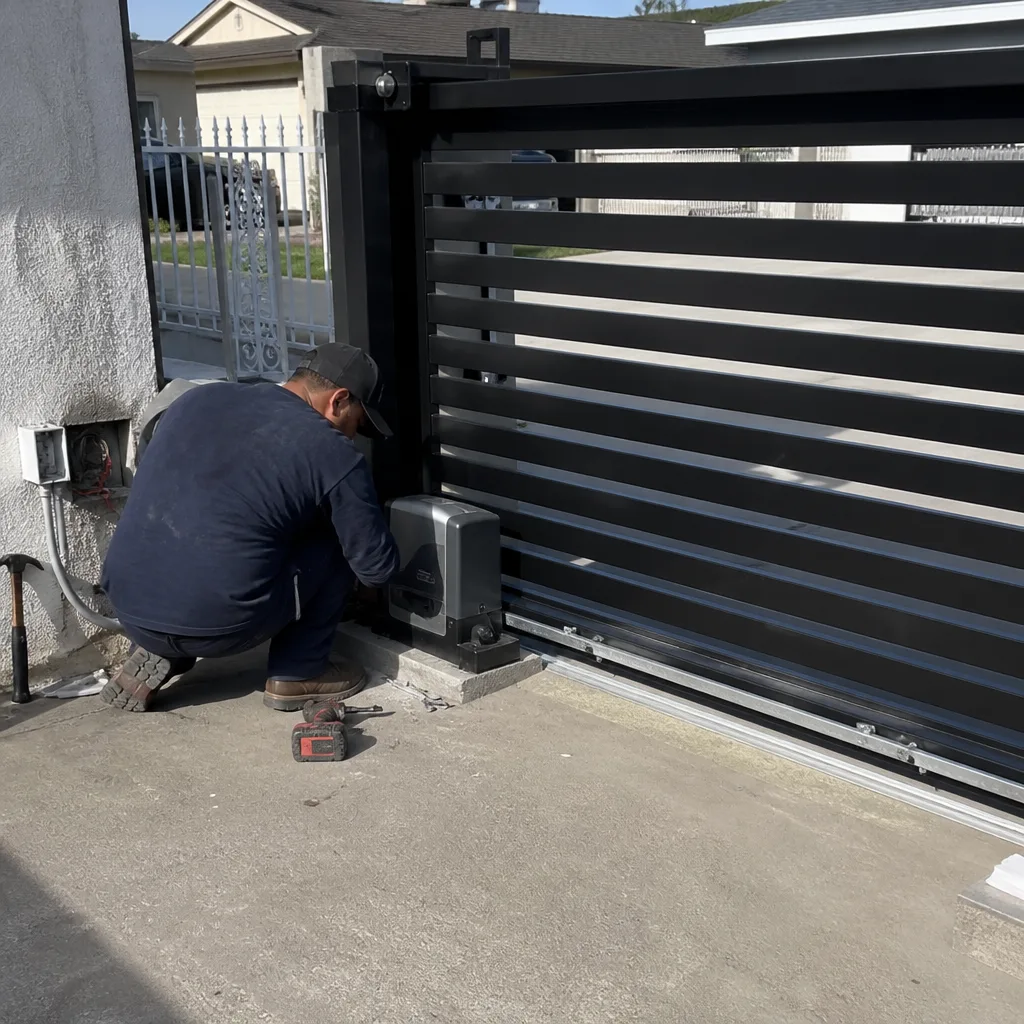 After
Frequently Asked Questions
Locate the manual release on your gate operator. For swing gates, pull the release handle or key cylinder on the operator arm, then push the gate leaf open by hand. For slide gates, open the operator cabinet and pull the release lever to disengage the drive, then walk the gate along its track. If the gate won’t move after release, call a gate specialist at (833) 620-0289.
Gate Repair South Gate services nine major brands: LiftMaster, FAAC, BFT, Linear, Viking, Ghost Controls, DoorKing, Elite, and Mighty Mule. That covers both residential systems like Mighty Mule and Ghost Controls, and commercial-grade operators like FAAC, BFT, and DoorKing. Brand-agnostic means the goal is fixing your existing system correctly, not replacing it with something else.
For emergency calls on stuck gates, yes. Gate Repair South Gate prioritizes same-day dispatch for gates that are stuck closed or open and creating a security or egress problem. Call (833) 620-0289 and describe the symptom. The more detail you provide on the phone, the better prepared the technician arrives.
Emergency gate repair costs depend on the failure. A tripped breaker or misaligned photo eye is a service call and a quick fix. A failed control board or gearbox is more. The honest answer is that we diagnose first and quote the exact price before any work begins, so you never get a surprise invoice. Estimates are free. Call (833) 620-0289 to get yours.
Only if your operator has a battery backup and that battery is healthy. Battery backups provide a limited number of open-close cycles, not unlimited operation. If your gate has no backup, it will not move during an outage unless you use the manual release. Check your operator now to confirm whether a backup is installed.
Electric gates add security and convenience, and they’re the right choice for most South Gate driveways. But they require maintenance: motor service, sensor alignment, battery replacement, and occasional control board repair. If you want the convenience without the surprises, plan for annual service on the operator. For installation decisions, we walk every property and quote based on gate weight, swing, power access, and brand compatibility. Call (833) 620-0289 for a free measure and written price.
The Bottom Line
Emergency preparedness for your gate is not about preventing every failure. It’s about knowing what to do in the first five minutes after the gate stops. Find your manual release and test it this week. Write down the operator brand, breaker number, and release location on an emergency gate card, and post it where people can find it. Understand what your battery backup actually covers. And have a gate specialist’s number saved before the emergency, not searched during it; browse more guides & resources to stay prepared. South Gate homeowners and property managers who do those five things turn a would-be crisis into a fifteen-minute inconvenience. Call Gate Repair South Gate at (833) 620-0289 if your gate is stuck now, or to schedule a free estimate on any repair, electric gate service, or installation.
Written by the team at Gate Repair South Gate, serving South Gate since 2013.