
Last updated November 2, 2026
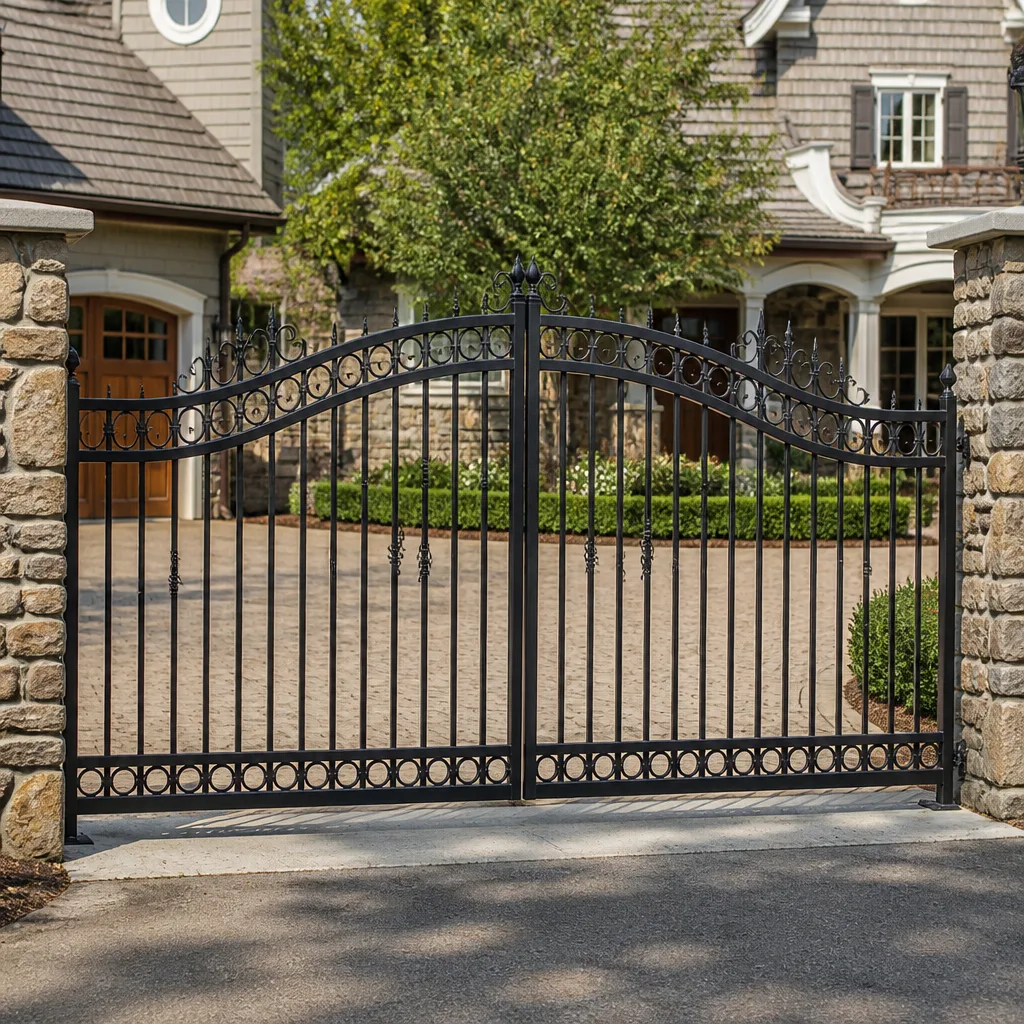 Wrought iron
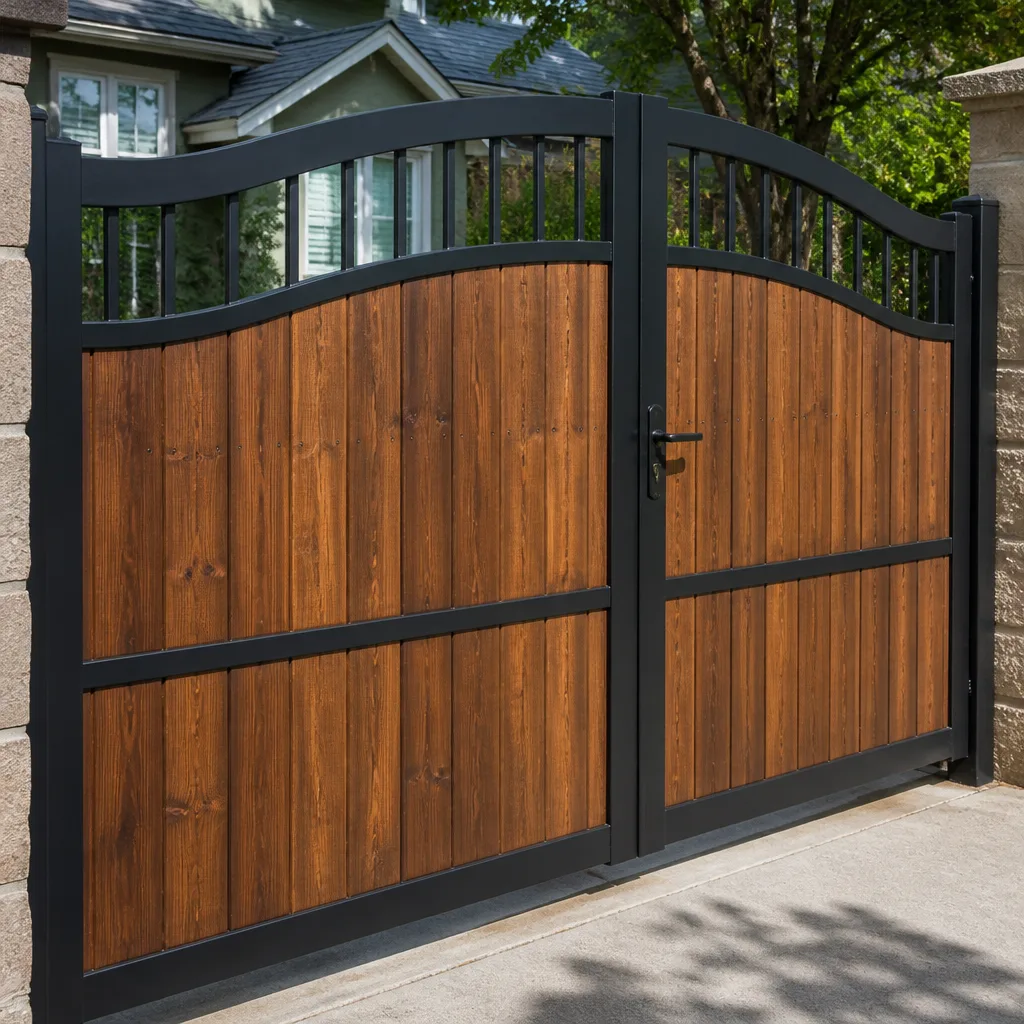 Wood & steel frame
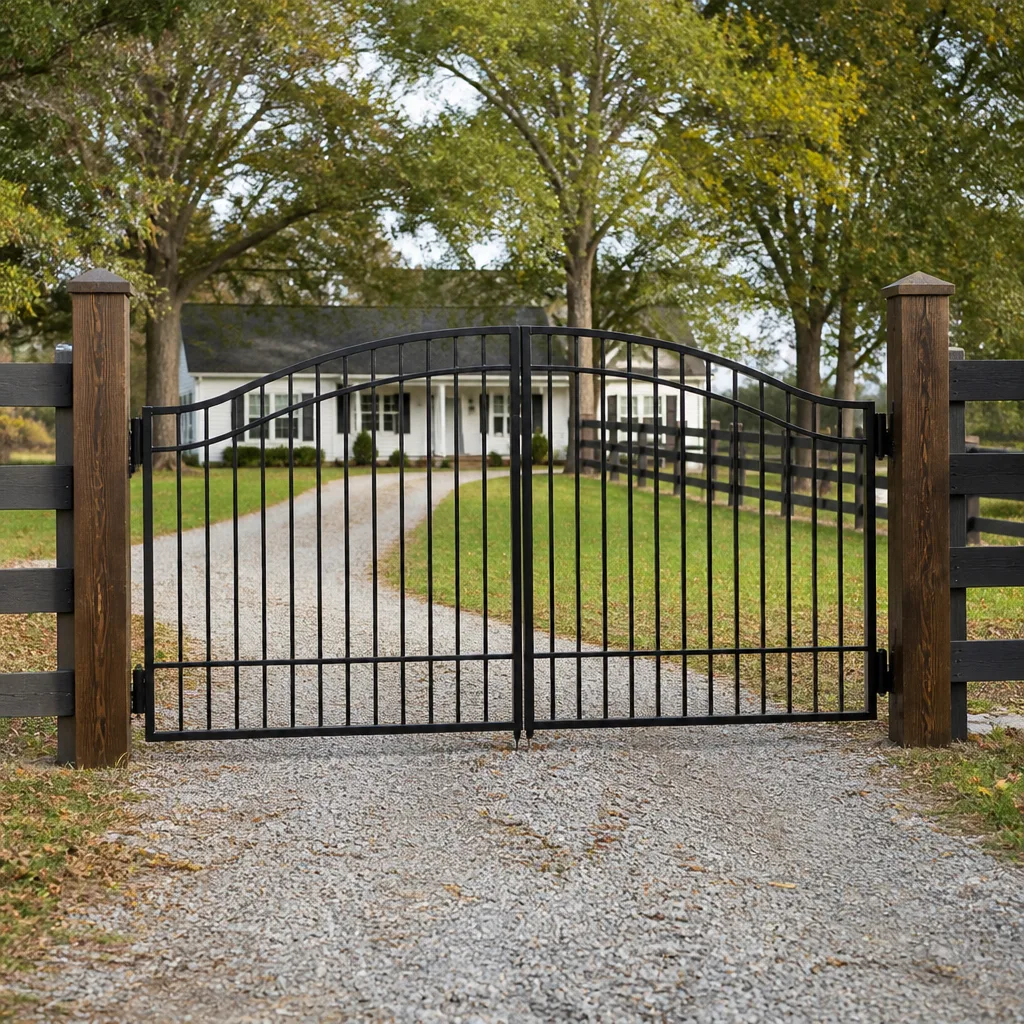 Farm & ranch
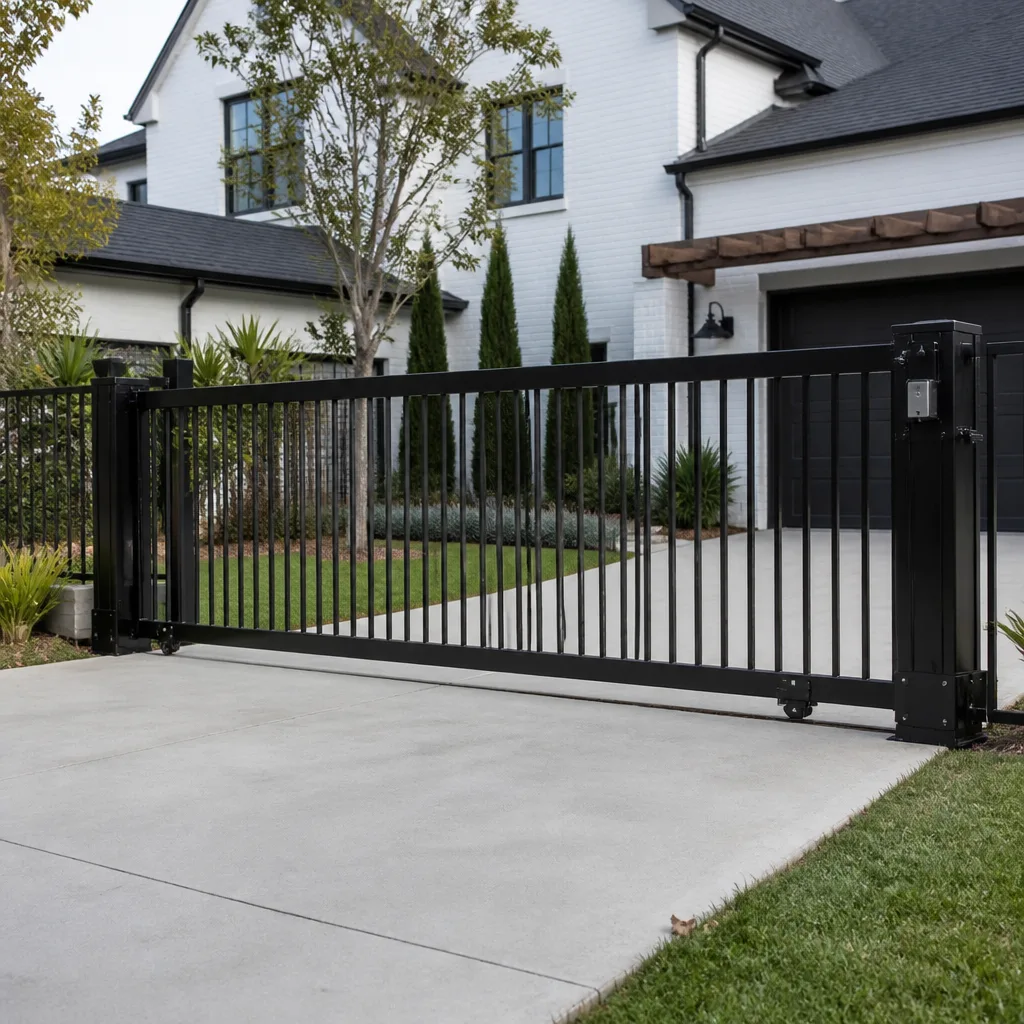 Sliding driveway gates
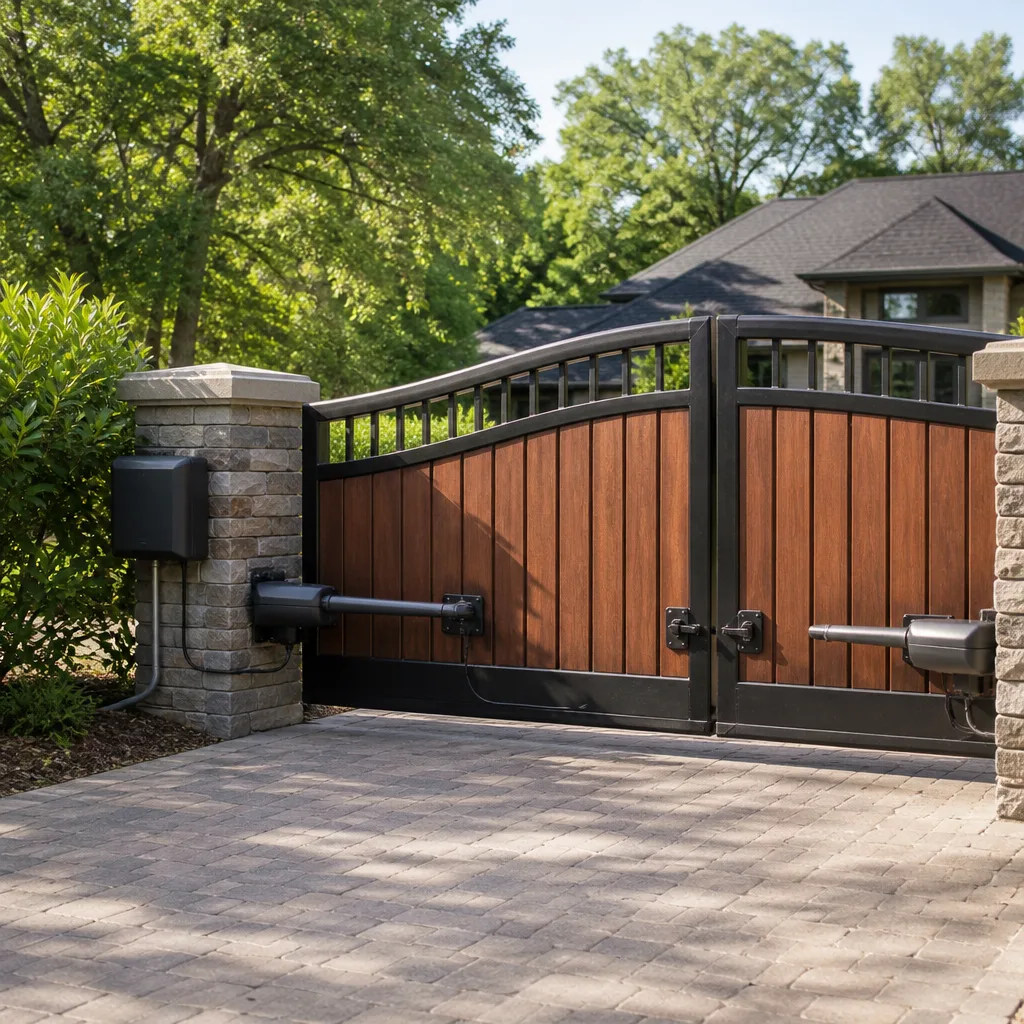 LiftMaster operators
Free on-site gate assessment - hinges, posts, and your LiftMaster or Nice gate operator checked before anything is quoted
The assessment is free and the quote is the invoice.
Get your free estimateSeasonal Gate Repair Care for South Gate: Year-Round Homeowner’s Guide
South Gate doesn’t have harsh winters, but it does have late-summer heat spikes that push gate control board operating temperatures past their rated threshold. Most gate failures here aren’t random, they follow the calendar. This guide covers the three stress windows that actually matter in South Gate, which components fail first in each one, and the specific preventive steps that keep an automatic gate running through every month of the year. You’ll learn what to inspect before August heat, what to check after Santa Ana winds, and why the marine layer does more damage to gate hardware than most homeowners realize.
Styles & brands we work with
- Wrought iron
- Wood & steel frame
- Farm & ranch
- Sliding driveway gates
- LiftMaster operators
Quick Answer
Seasonal gate care in South Gate, CA means preparing for three stress windows: late-summer heat events that overheat control boards and motors, Santa Ana wind season that drives debris into tracks and sensor paths, and marine-layer winter months that accelerate corrosion on exposed hardware. The most important seasonal task is verifying battery backup charge capacity before August, a step most homeowners skip and the leading cause of emergency Gate Repair services calls in late summer.
Table of Contents
- The Three South Gate Stress Windows That Actually Matter
- Late-Summer Heat: The August Board Failure Window
- Santa Ana Wind Season: Debris, Impact, and Sensor Damage
- Marine-Layer Winter: The Corrosion Acceleration Window
- The Most Skipped Seasonal Task: Battery Backup Verification Before Summer
- Sun Exposure Orientation: South-Facing and West-Facing Operator Risks
- Post-Santa Ana Event Checklist for South Gate Homeowners
- Common Mistakes to Avoid
- When to Call a Professional
- Frequently Asked Questions
- The Bottom Line
The Three South Gate Stress Windows That Actually Matter
Generic seasonal gate guides assume four seasons with a hard winter, a thaw, and a rainy spring. South Gate doesn’t work that way. What we see in the field, year after year, is that gate failures in this part of the LA basin cluster into three distinct windows. Each one stresses a different set of components, and each one has a different signature failure mode.
The first window runs from mid-July through September, when inland heat builds and south-facing equipment boxes absorb full afternoon sun. The failure signature here is thermal: control boards shutting down intermittently, motors tripping their internal overload protection, and capacitor degradation in older operators from LiftMaster and Mighty Mule systems.
The second window is Santa Ana season, roughly October through February, when northeast winds push dry air, leaves, dust, and loose debris across properties throughout the greater LA basin. The signature failures here are mechanical and sensor-related: debris wedged into track channels, photo-eye misalignment from wind-driven vibration, and impact damage from branches or objects blown into gate panels.
The third window is the marine-layer stretch from late spring into early summer, when overnight fog and high humidity settle over South Gate and the surrounding area. The signature failure is corrosion: oxidized wiring connections, rust on hinge brackets, and degradation of exposed limit switch components.
Each of these windows is predictable. And each one has specific, part-level preventive work that reduces the chance of an emergency call. That’s what the rest of this guide covers, and you can find more guides & resources on our blog.
Late-Summer Heat: The August Board Failure Window
Control boards inside gate operators are rated to operate within a specific temperature range. Most residential boards, including those in LiftMaster and Mighty Mule units, are rated to about 158 degrees Fahrenheit at the upper end. That sounds like a lot until you factor in what happens inside a closed operator box on a 95-degree South Gate afternoon.
The box itself traps heat. If the operator is mounted in direct sun, especially on a south-facing or west-facing post, the internal temperature can climb 30 to 40 degrees above ambient. That puts the control board right at the edge of its rated threshold, and electronics that run hot for weeks at a time start to fail in specific, repeatable ways.
The most common late-summer failure we repair is a control board that works in the morning and shuts down by mid-afternoon, as detailed in our The Complete Gate Repair Guide for South Gate Homeowners. The gate opens fine at 8 a.m., won’t respond at 3 p.m., and works again after dark. Homeowners describe it as an intermittent problem, but it’s actually a thermal threshold problem. Once the board’s weak component heats past its tolerance, the gate stops responding. When it cools down, operation returns. This cycle repeats until the component fails permanently.
Motors have similar thermal limits. A DC motor in a residential swing gate operator builds heat during every open-and-close cycle. In August, the motor doesn’t shed that heat between cycles the way it does in cooler months. The thermal overload sensor inside the motor is designed to trip and shut the motor down before it burns out, which is a good thing, but it means the gate stops working exactly when the homeowner needs it most, in the middle of a hot day.
What to do before the heat window, in a practical sense:
- Inspect the operator box for direct sun exposure. If the sun hits the box between noon and 4 p.m., shade it. A simple shade panel mounted a few inches above the box, with airflow space underneath, drops internal temperature significantly.
- Check that the operator’s ventilation openings are clear of dust, spider webs, and paint. Blocked vents trap heat.
- Listen to the motor during a full open-and-close cycle. A motor that hums louder in hot weather or stalls mid-cycle is running near its thermal limit.
- Test the gate a few times in the late afternoon, the hottest part of the day. If it behaves differently than it does in the morning, the system is already in thermal stress territory.
We also recommend confirming the gate’s gearbox and chain or belt tension are correct before high heat arrives. A misaligned or over-tightened drive system makes the motor work harder, which raises internal operating temperature, which shortens the window before thermal shutdown.
For homeowners with older FAAC or BFT operators on commercial or multi-unit properties, the heat stress is magnified because those motors cycle far more often. A gate serving a small apartment building in South Gate might open and close 200 times a day in the summer. That’s continuous thermal load. Property managers should have the board’s cooling and the motor’s thermal sensor checked every July, before the August heat locks in, as recommended in our guide on Choosing the Right Gate Repair Brand: A Buyer’s Guide for South Gate.
Santa Ana Wind Season: Debris, Impact, and Sensor Damage
Santa Ana winds are the second major stress window for gates in South Gate and across the greater LA basin. These are dry, gusty northeast winds that commonly reach sustained speeds of 20 to 40 mph, with stronger gusts. They blow from October through February, peaking between December and January.
For a gate system, Santa Ana winds create three distinct problems. First is debris ingestion. Dry leaves, palm fronds, paper, plastic bags, and loose dirt blow horizontally for days at a time. Anything that lands in a track channel, a roller guide, or a slide gate’s receiver rail creates friction, misalignment, or outright jamming. Second is impact damage. A wind-driven branch, a plastic trash can, or even a loose patio cushion can hit a gate panel hard enough to bend it, knock it off its rail, or break a hinge weld. Third is vibration-induced sensor misalignment. Photo-eye sensors are designed to sit within a narrow beam alignment. Sustained wind shaking a gate post or an operator mounting bracket knocks those sensors just far enough out of alignment that the gate refuses to close, thinking something is in the path.
The fix for Santa Ana season isn’t one big repair. It’s a checklist of pre-season and post-event work. Here’s the pre-season preparation, in order:
- Clear the entire gate path, including the track area for slide gates, of leaves, branches, and loose objects.
- Tighten all visible mounting bolts: hinge brackets, operator mount, track bolts, and post caps. Wind exploits loose hardware.
- Check that the gate wheels or rollers sit fully in their track channel. A wheel riding even slightly high gets knocked out by the first strong gust.
- Remove anything near the gate that could become airborne: empty trash cans, stacked paving stones, lightweight planters, loose gate hardware waiting to be installed.
- Walk the full arc of a swing gate in both directions. Low branches that don’t touch the gate in calm conditions can scrape against it when wind pushes the gate slightly off plane.
If a strong Santa Ana event has already happened, use the post-storm checklist in the Post-Santa Ana Event Checklist section below.
Marine-Layer Winter: The Corrosion Acceleration Window
South Gate sits inland enough to avoid direct ocean salt spray, but the marine layer still reaches this part of the LA basin. Late spring into early summer brings overnight fog and consistent morning humidity. The pattern is simple: moisture condenses on exposed metal overnight, burns off by mid-morning, and repeats every day for weeks. That cycle, condensation followed by dry-off, is what accelerates corrosion. It’s not the moisture alone that does the damage. It’s the repeated wet-dry cycling that keeps oxidation active on bare metal surfaces.
The components most vulnerable during this window are exposed wiring connections, hinge pins, limit switch contacts, and any unpainted steel bracket or bolt. Wiring connections corrode slowly, and the first symptom is usually a gate that works intermittently or responds slower than it used to. By the time a wire connection has oxidized enough to fail completely, the damage has often spread into the wire itself, which converts a simple repair into a splice-and-seal job.
What to check during the marine-layer months:
- Open the operator box and look at every wire terminal. Green or white powdery buildup on a terminal is active corrosion and should be cleaned and treated.
- Check hinge pins for rust-colored streaks. A hinge that’s corroding internally will eventually bind, and a bound hinge puts extra load on the motor.
- Inspect limit switches and safety edge contacts. These sit on the moving part of the gate and get exposed to the widest temperature and humidity swings.
- Look at any exposed low-voltage wiring, especially runs to keypads, intercoms, and exit loops. Cracked insulation on low-voltage wire lets moisture into the conductor.
A wire brush and a proper anti-corrosion treatment on exposed fasteners every spring takes an hour and prevents most of the corrosion-related failures we see on multi-unit properties in South Gate.
Our experience with electric gate systems across the area tells us one consistent story: corrosion failures are rarely dramatic, and that’s exactly why they get ignored. A rusted limit switch doesn’t fail with a bang. It fails a little at a time, until the gate over-travels, jams against the stop, and trips the motor’s overload protection. By that point, the repair is more involved and more expensive than it would have been if the corrosion had been caught a month earlier. This is the kind of work we handle as Electric Gate Repair in South Gate specialists, where our focus is diagnosing and fixing the actual component rather than selling a replacement.
The Most Skipped Seasonal Task: Battery Backup Verification Before Summer
Every automatic gate system with a battery backup uses that battery for one job: keeping the gate operational during a power outage. But battery backup systems don’t sit idle waiting for a blackout. The battery is part of the operator’s power system, and it ages. Heat accelerates that aging. A battery that was marginal in April can be dead by September, not from a power outage, but from heat-driven degradation during the summer months.
Here’s what happens in practice. A homeowner has a power outage in August. The air conditioner is out, the lights are off, and the gate should operate on battery. It doesn’t. The battery, which has been quietly discharging and degrading through weeks of high heat, has no usable charge left. The homeowner calls for emergency service, and the diagnosis is a battery that should have been checked and replaced two months earlier. This exact scenario, in our field experience, is the most common late-summer emergency call in South Gate and the surrounding area.
The fix is a five-minute check, and here’s the step-by-step version:
- Locate the battery backup. On most residential systems from Mighty Mule and Ghost Controls, it’s inside or adjacent to the operator housing. On LiftMaster and commercial-grade FAAC and BFT units, it’s often in a separate enclosure.
- Note the battery’s date code. Most backup batteries have a service life of 2 to 4 years under normal conditions. In South Gate heat, that range skews toward the shorter end.
- Test the charge. The correct method is a load test, which checks the battery under draw, not just a multimeter voltage reading. A battery can show full voltage at rest and still collapse under load.
- If the battery is more than 3 years old, or if the load test shows weak capacity, replace it before the August heat window with a battery matched to the operator’s specifications.
- Mark the replacement date on the battery with a permanent marker so the next check doesn’t require guesswork.
If you’re not comfortable opening the operator box or testing the battery yourself, this is also a quick service call. Any gate repair specialist can run the check in under 15 minutes, and it’s far less disruptive than an emergency battery replacement at 9 p.m. during a heat wave.
Sun Exposure Orientation: South-Facing and West-Facing Operator Risks
The orientation of your gate operator matters more in South Gate than it does in most of the country. This is not a trivial detail. A south-facing operator gets direct sun for the longest stretch of the day, and a west-facing operator gets the hottest sun, the late-afternoon kind that comes after the ambient air temperature has already peaked. In either case, the operator box absorbs heat for hours at a stretch, and the components inside never get a chance to shed it until after dark.
The component most affected by orientation-driven heat is the control board. On a gate with a south-facing or west-facing operator, the board’s average operating temperature runs measurably higher than the same board in a shaded or north-facing installation. This shortens the board’s life and increases the frequency of heat-related shutdowns. Capacitors, which are temperature-sensitive, degrade faster in hot boxes. This is true across brands, from entry-level Mighty Mule systems to commercial BFT and FAAC operators.
There are three practical steps for a hot-facing operator:
- Shade the box, not the airflow. A shade panel mounted above the operator with a gap for airflow reduces direct solar load without trapping heat. Never wrap the box in insulation or a cover that blocks ventilation.
- Consider relocating the operator to a shaded side of the post if the installation allows. This is a bigger job, but on a new Gate Installation in South Gate, it’s worth planning from the start.
- Upgrade to an operator with better thermal tolerance if the current one is heat-loading beyond its rating. This is a conversation we have with property owners when a board has failed twice in one summer: at some point, the right fix is a unit designed for the heat, not another board for a box that’s cooking itself.
The orientation check also applies to keypads. A keypad mounted on a west-facing gate post bakes all afternoon. The plastic housing degrades, the internal contacts corrode faster, and the keypad’s lifespan drops. If a keypad has to live on a hot-facing surface, choose a model with a metal housing or add a small shade hood.
Post-Santa Ana Event Checklist for South Gate Homeowners
After a significant Santa Ana event, the impulse is to check the house and the roof. The gate usually gets a glance, at most. But high-wind events damage gates in ways that don’t show up immediately. Use this checklist after any Santa Ana event with gusts above 30 mph, and definitely after the stronger events that knock down branches:
- Run the gate through a full open-and-close cycle. Listen for grinding, scraping, or any change in motor pitch from the last normal cycle. A change in sound means something moved.
- Walk the full track for slide gates and clear debris from the receiver rail and wheel channels. Don’t just sweep the visible surface. Bend down and look inside the channel.
- Check both photo-eye sensors. Look for shifted alignment, bent brackets, or debris resting in the sensor’s line of sight. Misaligned sensors cause the gate to stop and reverse, which looks like a motor failure but is actually a safety-system signal.
- Inspect the gate panel for dents, bends, or stress marks at hinge and weld points. Impact damage from wind-blown objects often shows up first at the hinge side, where the gate experiences the most leverage.
- Check all wiring conduit and outdoor junction boxes for cracks or separations. Wind whips exposed conduit, and a cracked conduit lets moisture into the wiring, which sets up the next failure.
- Test safety edges and warning lights. If the gate now beeps continuously or the warning light stays on, the event damaged a safety circuit that needs attention before it disables the gate.
Most of these checks take ten minutes. What they prevent is the classic post-wind failure: the gate that worked fine during the storm, then jams or shorts two days later when the shifted component finally moves the rest of the way out of position.
Common Mistakes to Avoid
- Lubricating without cleaning first. Spraying lubricant over dirt and debris creates an abrasive paste that accelerates wear on hinges, rollers, and tracks. Clean the surface, then lubricate.
- Ignoring slow operation. A gate that moves slower than it did last season is signaling increased load or a weakening motor. Waiting for a full stop converts a tune-up into a replacement.
- Testing the battery backup by unplugging the operator. Cutting AC power tests the battery under a sudden draw, but it doesn’t reveal a battery that has lost capacity. A battery that works for one cycle and dies needs a proper load test.
- Repainting over corrosion without treating it. Paint seals moisture in and lets corrosion continue underneath. Remove the oxidation first, treat the surface, then paint.
- Assuming the gate is fine because it worked all winter. Most gate failures are cumulative. The component that breaks in August was degrading in May and June. Seasonal inspection catches the problem before the failure, not after.
- Forcing a jammed gate open or closed by hand. A gate that’s stuck is stuck for a reason. Forcing it can bend track rails, strip gears, or snap a chain, converting a minor repair into a major one.
When to Call a Professional
Some seasonal gate issues are clearly beyond a homeowner’s toolkit. A control board that’s burning out, a motor with a failed thermal sensor, a slide gate that has jumped its track, or a system with intermittent electrical faults all need someone who works on gates specifically, not a generalist. High-tension gate springs, especially on older counterweight systems, carry enough stored energy to cause serious injury if mishandled. If your gate has a spring-based counterweight system, do not attempt to adjust or remove it. Call a specialist.
Gate Repair South Gate offers free estimates in South Gate. If a seasonal inspection reveals something you’re not equipped to handle, call (833) 620-0289.
Frequently Asked Questions
Seasonal gate maintenance in South Gate typically costs $150 to $350 per visit, depending on the system type, the number of operators, and whether parts like batteries or corroded connectors need replacement. The cost is quoted and agreed before any work starts. Call (833) 620-0289 for an exact quote based on your system.
Yes. Heat-related gate failures are one of the most common repair calls in South Gate during August and September, and a heat-failed control board or tripped motor thermal sensor can usually be diagnosed and repaired the same day. The fastest way to get an exact diagnosis and a same-day repair plan is to call (833) 620-0289.
A gate in South Gate should be inspected and serviced twice a year: once before the late-summer heat window in July, and once after Santa Ana season in February or March. That schedule covers the two failure clusters that produce the most service calls in this climate.
Our team is trained to service nine major gate automation brands, including LiftMaster, FAAC, BFT, and Mighty Mule. We diagnose and repair the system you already own rather than pushing a brand change. Learn more about our Gate Repair in South Gate service.
Run the gate through one full cycle and listen for any change in sound, then inspect the track, sensors, and hinge points for damage or debris. If anything is visibly bent, misaligned, or making noise, stop using the gate and have it inspected before the damage worsens.
Yes. We service entry-level residential systems like Mighty Mule and Ghost Controls, and commercial-grade operators from FAAC, BFT, Elite, and others. The same seasonal maintenance principles apply to both, but commercial gates that cycle hundreds of times a day need more frequent service intervals.
The Bottom Line
Seasonal gate care in South Gate isn’t about four seasons. It’s about three stress windows: late-summer heat, Santa Ana winds, and marine-layer humidity. Each window attacks a different set of components, from control boards and motors to track rails, sensors, and wire connections. The highest-value preventive task is the one most homeowners skip: verifying battery backup capacity before summer. Catch the battery before it dies, clear the debris before it jams the track, and inspect the wiring before corrosion spreads, and most emergency gate repairs simply don’t happen. For everything else, Gate Repair South Gate home is one call away.
Written by the team at Gate Repair South Gate, serving South Gate since 2013.
See the difference
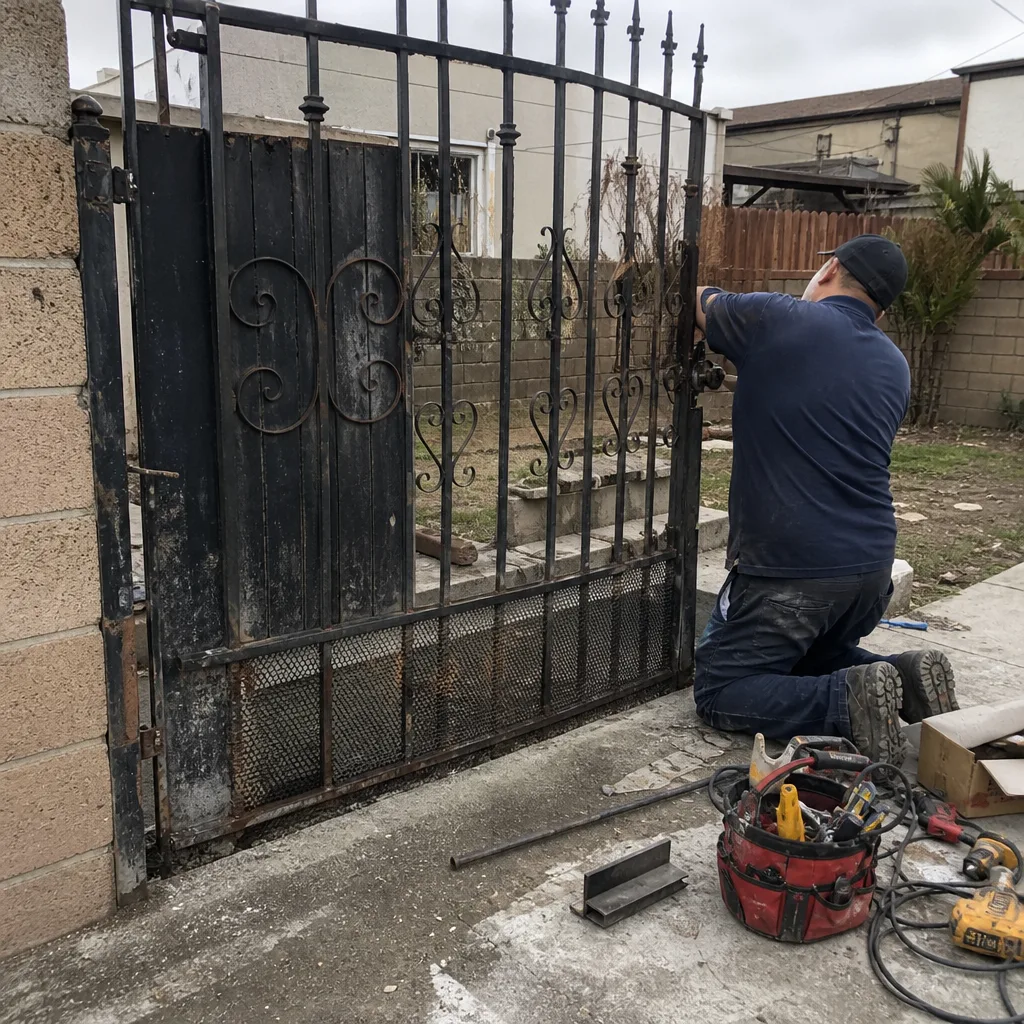 Before
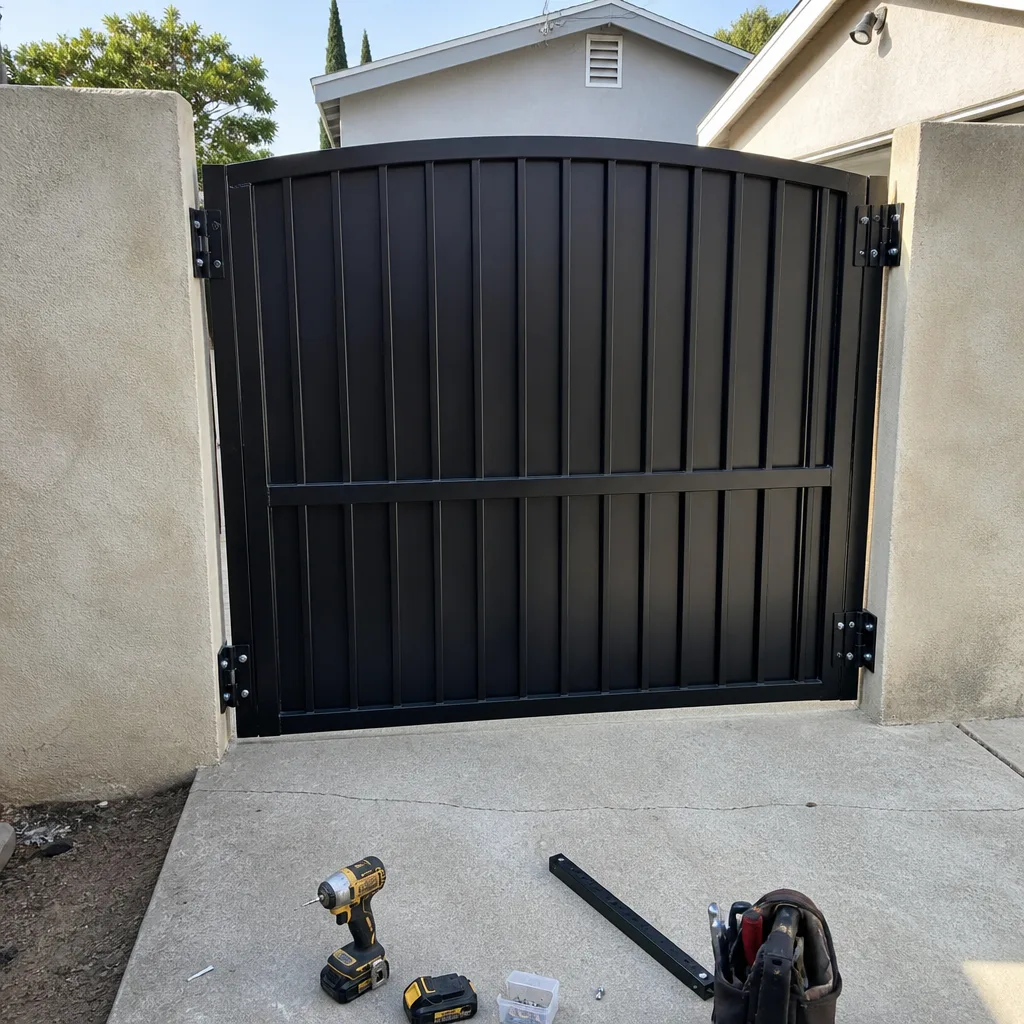 After
 Before
 After
 Before
 After