
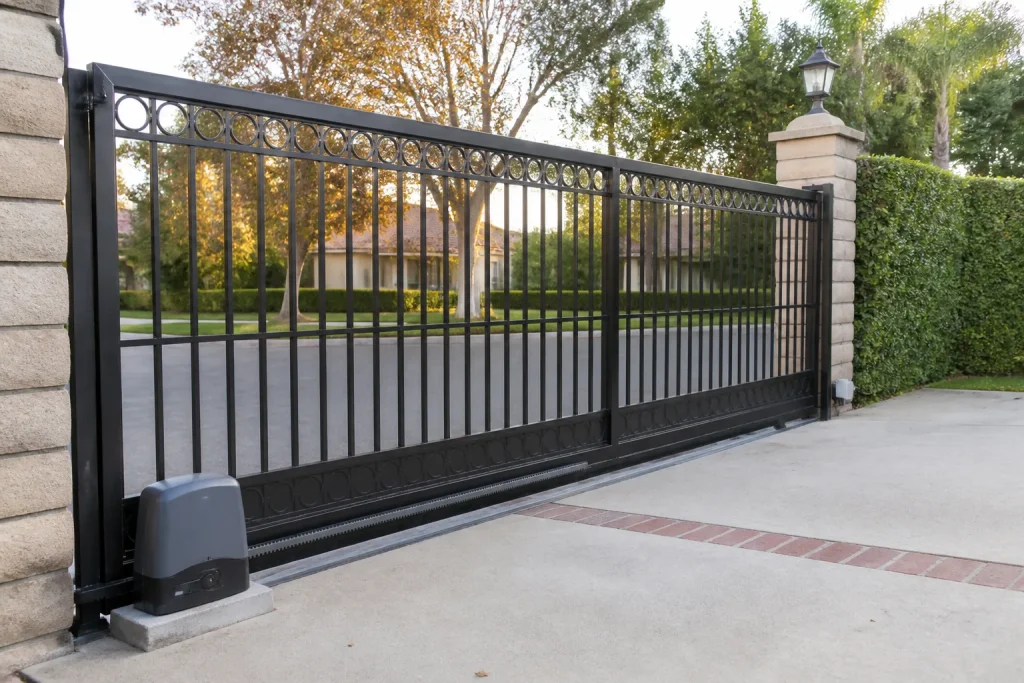
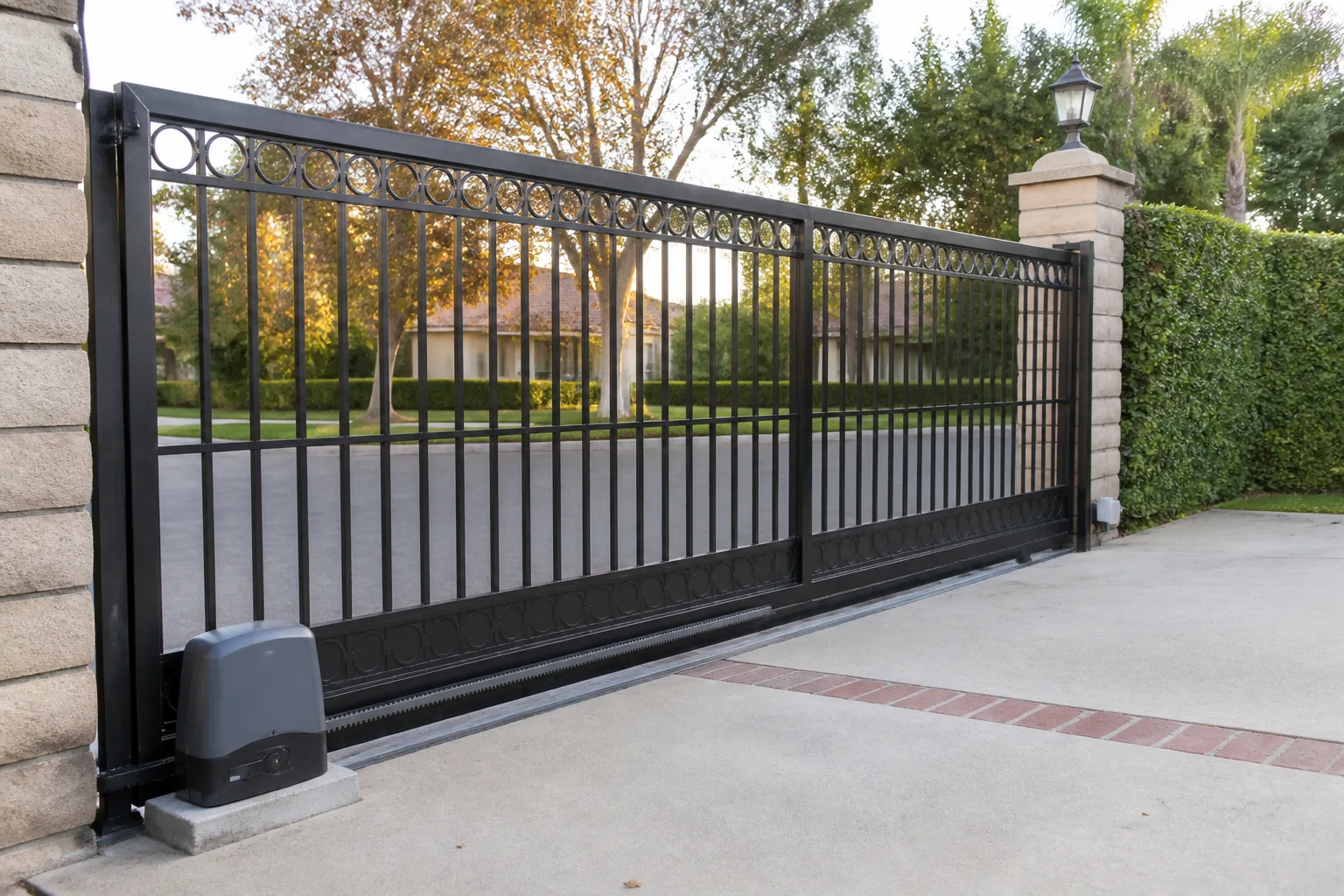
LiftMaster Gate Repair in South Gate: A Homeowner’s Guide
LiftMaster gate repair in South Gate usually comes down to one of three things: a failed capacitor on the motor, a control board that lost its programming, or a safety sensor throwing a false fault. Most repairs we handle take under two hours once the real problem is identified. If you’d rather skip the troubleshooting and get a specialist on-site, call (833) 620-0289 for a free estimate.
Here’s the thing most homeowners don’t know: LiftMaster is the most installed gate operator brand in South Gate, from the residential swing gates along Tweedy Boulevard to the commercial slide gates behind the industrial parks off Santa Fe Avenue. And because it’s everywhere, it’s also the most misrepaired. Technicians who don’t work on gates full-time see a myQ connectivity error and assume the board is fried. We’ve pulled perfectly good control boards out of gates where the only real problem was a router that got unplugged during a remodel.
How LiftMaster’s myQ System Actually Works (And Why It Confuses Everyone)
LiftMaster’s myQ platform connects your gate operator to your home Wi-Fi so you can open and close the gate from your phone. The system relies on a constant handshake between three components: the operator’s logic board, the myQ hub or built-in radio, and your home network. When any one of those three loses communication, the operator can appear completely dead. No response from the remote. No response from the keypad. Nothing.
A dropped Wi-Fi handshake can make a perfectly functional gate operator look completely dead. Three South Gate homeowners last year paid for board replacements they didn’t need because the technician didn’t know the difference between a cloud connectivity fault and a physical hardware failure.
Here’s the diagnostic sequence we run before ordering any parts:
- Check the operator’s LED indicators. A solid green light means the board has power and is communicating. A blinking pattern tells you which subsystem is failing. LiftMaster publishes the blink codes, and most are network-related, not electrical.
- Test the gate with the hardwired wall button or keypad. If the gate opens locally but not through the app, the problem is the myQ connection, not the motor or board.
- Reboot the operator and the router. This sounds basic, but it resolves more myQ faults than any component replacement. A full power cycle on both ends forces a fresh handshake.
- Check for interference. South Gate homes with metal fencing, stucco walls, or operators mounted inside garages often have weak signal. A Wi-Fi extender near the operator solves it without touching the gate hardware.
In our experience, roughly a third of the LiftMaster “dead gate” calls we get in South Gate are network faults, not mechanical failures. That’s why we diagnose before we quote parts. The goal is fixing what’s actually wrong, not selling you a board you don’t need.
The Most Failure-Prone LiftMaster Components by Model Series
LiftMaster makes a wide range of operators, and the failure points vary significantly by series. If you know which model you have, you can make a smarter repair decision before calling anyone. Here’s what we see most often on South Gate properties:
- CSW200 (commercial slide gate operator): The most common failure is the capacitor, especially on gates that cycle more than 40 times a day. We also see limit switch drift on older units that haven’t been serviced in years. Repair is almost always worth it on the CSW200; these are built for commercial duty and a $120 capacitor beats a $2,400 replacement operator.
- LA400 (residential swing gate operator): The LA400’s known weak point is the control board’s relay, which can burn out after repeated surges or lightning strikes in South Gate’s summer storm season. The second failure point is the battery backup, which typically dies after 3 to 5 years and triggers false low-voltage alarms. Board replacement on an LA400 runs roughly $300 to $500 in parts depending on the revision. If the gate is over 12 years old and the arm itself is worn, replacement starts to make more sense.
- LA500 (heavy residential and light commercial): These hold up well, but the gearbox seals degrade with age and let moisture in. By the time you hear grinding, the damage is internal. Gearbox rebuild is usually feasible and costs less than half of a new operator.
- CSL24V and CSW24V (mid-range commercial): We mostly see photo-eye alignment faults on these, especially on South Gate driveways with settled concrete or tree roots pushing the gate posts out of square.
The repair versus replace threshold we use is simple: if the operator is under 10 years old and the failure is isolated to one component, repair it. If it’s over 15 years old, has multiple failing systems, and parts are discontinued, replacement is the honest recommendation. We won’t push a replacement on a repairable unit.
LiftMaster’s Safety Entrapment Reversal: Why Uneven Driveways Trigger False Faults
LiftMaster operators use an obstruction detection system that monitors motor current and, on some models, a physical edge sensor. When the gate encounters resistance, it reverses direction to prevent entrapment. That’s a UL 325 requirement, and it’s a good thing. But on South Gate properties with uneven concrete driveways, settled pavers, or tree roots lifting the gate track, that safety system can trigger false faults.
What that looks like: the gate starts to close, stops halfway, and reverses. Or it refuses to close at all and the operator flashes a fault code. Homeowners assume the motor is weak. It’s not. The operator is doing exactly what it’s designed to do: it’s sensing resistance and backing off.
The fix is recalibrating the force settings and, where needed, adjusting the gate’s physical alignment. Here’s what that involves:
- Force profile recalibration: LiftMaster operators let you run a learn cycle that teaches the board how much current a normal open/close cycle draws. On older units this is done with a button press sequence; on myQ models it’s done through the app.
- Limit adjustment: If the gate travels too far and hits the post, the operator reads that as an obstruction. Adjusting the open and close limits stops the false reversal.
- Physical gate alignment: A sagging gate leaf on a swing system, or a drive chain that’s too loose on a slide system, adds resistance the operator wasn’t designed for. We fix the mechanical issue before touching the electronics.
This is where the Gate Repair in South Gate side of our work comes in. A lot of “motor problems” on LiftMaster operators are actually hinge, wheel, or track problems that make the motor work harder than it should. Fix the mechanical resistance and the false faults disappear.
What LiftMaster’s Warranty Actually Covers in 2026
Understanding your warranty status before agreeing to any repair matters more than you’d think. LiftMaster’s warranty structure in 2026 breaks down like this:
- Residential operators (LA400, LA500, RSL12U): Typically 5 years on the motor and gearbox, 1 year on control boards and accessories. Some premium models carry a limited lifetime warranty on the motor, but boards and electronics stay at 1 year.
- Commercial operators (CSW200, CSL24V, CSW24V): Usually 2 years on the operator with specific exclusions for high-cycle applications. If the gate exceeds the rated daily cycle count, the warranty doesn’t apply.
- RSL (Revenue Service Lifetime) commercial line: These carry extended coverage because they’re built for 24/7 duty. Warranty terms vary by model, but the RSL designation means LiftMaster expects the operator to handle constant cycling and backs it accordingly.
Here’s the part most South Gate homeowners don’t realize: installing non-LiftMaster parts voids warranty coverage on the entire operator. A technician who replaces a failed capacitor with a generic part from an auto parts store just cost you your motor warranty. Same goes for aftermarket control boards, and wiring modifications that bypass safety circuits.
We’ve had customers bring us operators that another company “repaired” with mismatched parts, and we had to explain that LiftMaster would no longer stand behind the unit. The repair worked for a few months, then failed, and now the warranty was gone. If your gate is still under warranty, insist on genuine LiftMaster parts. It’s the difference between a covered repair and a full out-of-pocket replacement.
How LiftMaster Compares to Other Gate Operator Brands We Service
LiftMaster isn’t the only brand on the market, and it isn’t always the right answer for every South Gate property. As a multi-brand gate specialist, we fix and install all of them, so we can give you an honest comparison without a sales angle. Here’s how LiftMaster stacks up against a few brands we work on regularly:
- LiftMaster vs. DoorKing: DoorKing dominates the commercial slide gate market and has excellent parts availability, but its residential swing operators feel dated compared to LiftMaster’s myQ integration. If you want phone control and smart home compatibility, LiftMaster wins. If you have a heavy commercial slide gate on a high-cycle lot, DoorKing often holds up better.
- LiftMaster vs. Elite: Elite operators are workhorses, especially their slide gate line. But Elite’s residential interface is clunky, and their app has nowhere near the polish of myQ. For a homeowner who wants remote access, LiftMaster is the better experience. For a commercial property manager who never touches the app and just needs the gate to cycle all day, Elite is a strong choice.
- LiftMaster vs. Ghost Controls: Ghost Controls is a budget-friendly DIY option, and we see plenty of them on rental properties in South Gate. They work fine for light-duty gates, but the operators aren’t built for daily cycling over years. LiftMaster is the step up when a Ghost Controls unit gives out and the owner wants something that won’t need annual board swaps.
The point isn’t that LiftMaster is always the answer. It’s that we work on your brand, whatever it is. Most gate companies in the area push whatever brand they’re a dealer for. We’d rather fix the system you already own, correctly.
When to Call a Pro
Some LiftMaster issues are genuinely DIY-friendly: rebooting the operator, checking the Wi-Fi connection, replacing remote batteries, cleaning the photo-eye lenses. But anything involving the control board, motor capacitor, gearbox, or safety circuitry is not a homeowner repair. These operators run on 120V or 240V supply, and the capacitors store enough charge to hurt you even with the power off. There’s a reason we treat every board-level diagnostic with respect.
If your LiftMaster operator is showing a fault code you can’t clear, cycling intermittently, grinding, or smoking, kill the power at the breaker and call us. The diagnosis takes less time than you’d spend watching a repair video, and you won’t gamble your warranty on a guess. For Electric Gate Repair in South Gate, we cover everything from the motor to the keypad. If the operator is beyond saving, we also handle Gate Installation in South Gate, whether it’s a replacement LiftMaster or a switch to a different brand that fits your property better.
We pulled a CSW200 out of a complex off State Street last month where the property manager had been told by a generalist contractor that the motor was seized. The actual problem? A wire nut corroded through on the power feed. Fifteen minutes of rewiring and the gate ran like new. That’s the difference between a gate specialist and someone who also fixes gates.
Frequently Asked Questions
Most LiftMaster repairs in South Gate run between $180 and $600 depending on the component. A capacitor replacement is typically $180 to $250 total with labor. A control board replacement runs $300 to $600 depending on which model and revision you have. A full operator replacement with installation starts around $1,400 for residential units and $2,200+ for commercial slide gate operators. We quote the price before any work starts, and you approve it before we touch anything.
That’s almost always the safety system: either a photo eye is misaligned or blocked, or the force setting is reading resistance from the gate and triggering the entrapment reversal. Start by cleaning the photo-eye lenses and making sure they’re pointed at each other. If the problem persists, the gate itself likely has mechanical resistance on the close cycle, and recalibration is needed. Call (833) 620-0289 and we’ll sort it out.
Yes, and it happens often. A Wi-Fi dropout, a router change, or a power blip can make the app report a fault that doesn’t exist at the operator level. The gate will often work fine from the hardwired keypad while the app shows an error. Rebooting the operator and reconnecting myQ to your network usually resolves it. If it doesn’t, the myQ radio module may have failed, which is a straightforward replacement.
Yes. LiftMaster’s warranty terms exclude damage caused by non-genuine parts, and in practice, any board, capacitor, or sensor that isn’t a genuine LiftMaster component voids coverage on the affected system. If a previous repair used generic parts, your warranty may already be compromised. We only install genuine LiftMaster parts on LiftMaster operators.
The Bottom Line
LiftMaster is a solid brand, and most failures we see in South Gate are either network-related faults, simple electrical component failures, or safety false-triggers from misaligned gates. The key is proper diagnosis before parts get ordered. If you’re in South Gate and your LiftMaster gate is acting up, Gate Repair South Gate home is here. We work on nine major gate brands, we know LiftMaster’s quirks better than most, and we’ll give you an honest repair-versus-replace answer. Free estimates, upfront pricing, same system fixed right. Call (833) 620-0289.
Written by the team at Gate Repair South Gate, serving South Gate since 2013.
Need Gate Repair Help?
Call Gate Repair South Gate - licensed & insured, here with fast help in South Gate.
(833) 620-0289